In this story
Before Whitney Houston's voice reached a global audience, music was already part of her family life. Her official biography identifies Cissy Houston as her mother and Dee Dee Warwick and Dionne Warwick as her cousins, and credits that family with nurturing her passion for gospel.
That documented connection offers a way to remember more than a celebrity's arrival. The public career grew from a musical family whose work connected gospel groups, performance, and recording.
Before the world heard the voice, the family had already made a room for it.
The family was the first stage
Whitney Houston is often remembered through arrival: the record deal, the debut album, the awards, the movie soundtracks, and the voice that became part of global memory. But the official record makes clear that she did not appear from nowhere. Her official biography identifies her as the daughter of Cissy Houston and the cousin of Dee Dee Warwick and Dionne Warwick, and says her mother and cousins nurtured her gospel passion from birth.
The family relationship matters because it places Houston's career within an existing musical tradition. It does not establish every private lesson or rehearsal; those moments are not described by the public records cited here.
Dionne Warwick was not just a famous cousin
Dionne Warwick also came from a spiritually and musically rooted family. Britannica describes her as raised in a family shaped by church and music, with her mother connected to the Drinkard Singers and Warwick beginning to sing in church as a child. By the time Whitney Houston became a public figure, Dionne Warwick had already shown how gospel discipline could travel into pop and R and B without losing emotional control.
Houston acknowledged that connection in the thank-you notes for her self-titled debut album. She described Dionne as an influence in both her career and her life. The acknowledgment is Houston's own public account, not an inference from a family snapshot.
What the public records reveal
Musical continuity can be heard and documented without treating an unidentified image as proof. The biography describes family encouragement, while the album notes name the people Houston credited with helping her.
Those records restore a human scale to a familiar career. They place a celebrated individual within relationships and musical work that existed before the debut album and the awards.
Family continuity in public
The public record later placed the private lineage in full view. Whitney Houston's awards archive notes that Dionne Warwick and Julian Lennon presented Houston with the Grammy for Best Pop Vocal Performance, Female, at the 28th Grammy Awards in 1986. The ceremony placed the two singers together in a moment of public recognition.
The biography, album acknowledgment, and award ceremony show different parts of that continuity: family formation, the artist's own thanks, and a public encounter between relatives inside a major music institution.
What we know and what we should not overstate
The cited public materials document the family relationship, gospel roots, and Houston’s acknowledgment of Dionne Warwick’s influence. They leave the details of her early musical training open.
The evidence and its limits
Biography, artist acknowledgments, and photographs answer different questions.
| Record | What it supports | Limit |
|---|---|---|
| Documented family line | Official Whitney Houston materials identify Cissy Houston, Dee Dee Warwick, and Dionne Warwick within the musical family context around Whitney. | These are public biographical relationships, not certification of private lineage. |
| Documented musical formation | Official Whitney Houston materials describe early gospel roots, church singing, and later performance beside her mother. | Specific private coaching moments are not claimed unless sourced. |
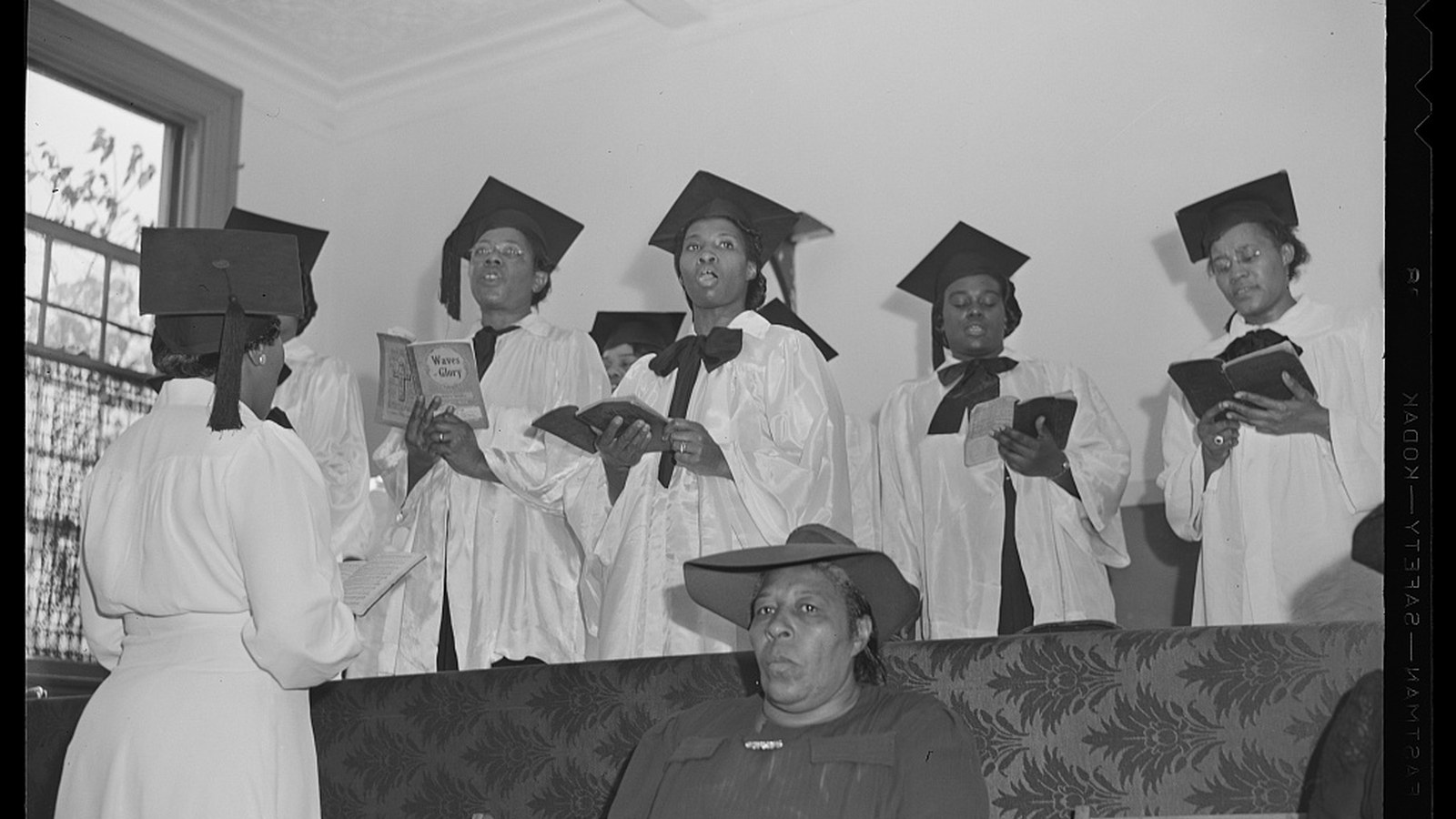
| Gordon Parks photograph | The Library of Congress catalog identifies a Church of God in Christ choir singing in Washington, D.C., in 1942. | The photograph documents that choir. It gives historical context for church singing. |
Remembering formation, not only arrival
Black musical history is not only made in studios, labels and award ceremonies. Houston's public account also locates it in family relationships and gospel traditions. That is the continuity this story follows.
Before the awards, there was a family. Houston’s official biography and her own acknowledgments trace the influence of relatives who were already making music.