Gospel belongs on CultureUp because it is not only a music category. It is public memory: worship, recording, performance, migration, civil rights, radio, television, church life, and family memory moving through sound.
Mahalia Jackson is a strong first guide for that lane. Smithsonian and Library of Congress records connect her voice to gospel performance, media documentation, and civil-rights-era public life.
Opening context
Mahalia Jackson Did Not Just Sing in Public. She Changed the Public Square. belongs on CultureUp because it teaches readers how public memory is built from records, places, institutions, media, and limits. The page should not ask readers to trust a headline alone. It should show the route from the claim to the source, then explain what the source can and cannot carry.
The attached NMAAHC and Library of Congress records support a public-culture profile. They connect Jackson to gospel public life and civil-rights-era memory without requiring CultureUp to reproduce copyrighted lyrics or unreviewed recordings.
The attached source trail is intentionally visible: 1. Mahalia Jackson profile record (Smithsonian National Museum of African American History and Culture): National Museum of African American History and Culture story on Mahalia Jackson, gospel, public performance, and civil-rights context. 2. Civil Rights Era exhibition record (Library of Congress): Library of Congress exhibition page connecting Mahalia Jackson to the Prayer Pilgrimage for Freedom and the March on Washington. 3. Gospel media rights cue (Library of Congress Prints and Photographs Division): Library of Congress image record for Mahalia Jackson showing how title, creator, date, repository, and rights notes should travel with media.
The core story
The record supports coverage of Jackson as a gospel performer with public cultural reach and civil-rights-era significance. It also supports a media-history question: how performances become public memory through institutions, exhibitions, recordings, and repeated circulation.
What the record shows
The record supports coverage of Jackson as a gospel performer with public cultural reach and civil-rights-era significance. It also supports a media-history question: how performances become public memory through institutions, exhibitions, recordings, and repeated circulation.
Source trail for readers
These are the sources already attached to this CMS record. They are the allowed evidence base for this depth pass.
| Source | Institution or credit | Reader route |
|---|---|---|
| Mahalia Jackson profile record | Smithsonian National Museum of African American History and Culture | https://nmaahc.si.edu/explore/stories/mahalia-jackson-gospel-takes-flight |
| Civil Rights Era exhibition record | Library of Congress | https://www.loc.gov/exhibits/african-american-odyssey/civil-rights-era.html |
| Gospel media rights cue | Library of Congress Prints and Photographs Division | https://www.loc.gov/item/2004663076/ |
What the record does not show
The attached sources do not authorize every clip, album cover, performance recording, or lyric excerpt. They also do not let CultureUp turn one performance into the whole story of gospel or civil-rights music.
Why this matters for CultureUp readers
CultureUp can make music history readable by keeping the source path visible. The page should let readers feel why the voice matters while still seeing the venue, institution, rights status, and memory frame.
That is why the page should keep public performance and media afterlife in the same frame. A voice can move through church, stage, march, exhibition, recording, and classroom memory, but each route has different evidence and rights conditions. CultureUp can honor the force of the performance while still naming the source holder and avoiding unsupported reuse.
Reader pathway
This profile should link readers to Gospel Sunday, the gospel timeline, the Black church page, and the source-trail standard.
Related CultureUp records for this page are /stories/african-burial-ground-return-buried-city, /stories/credits-belong-in-the-design, /stories/what-makes-a-source-note-useful. Those internal links should be treated as a reading path, not as filler.
Media and caption note
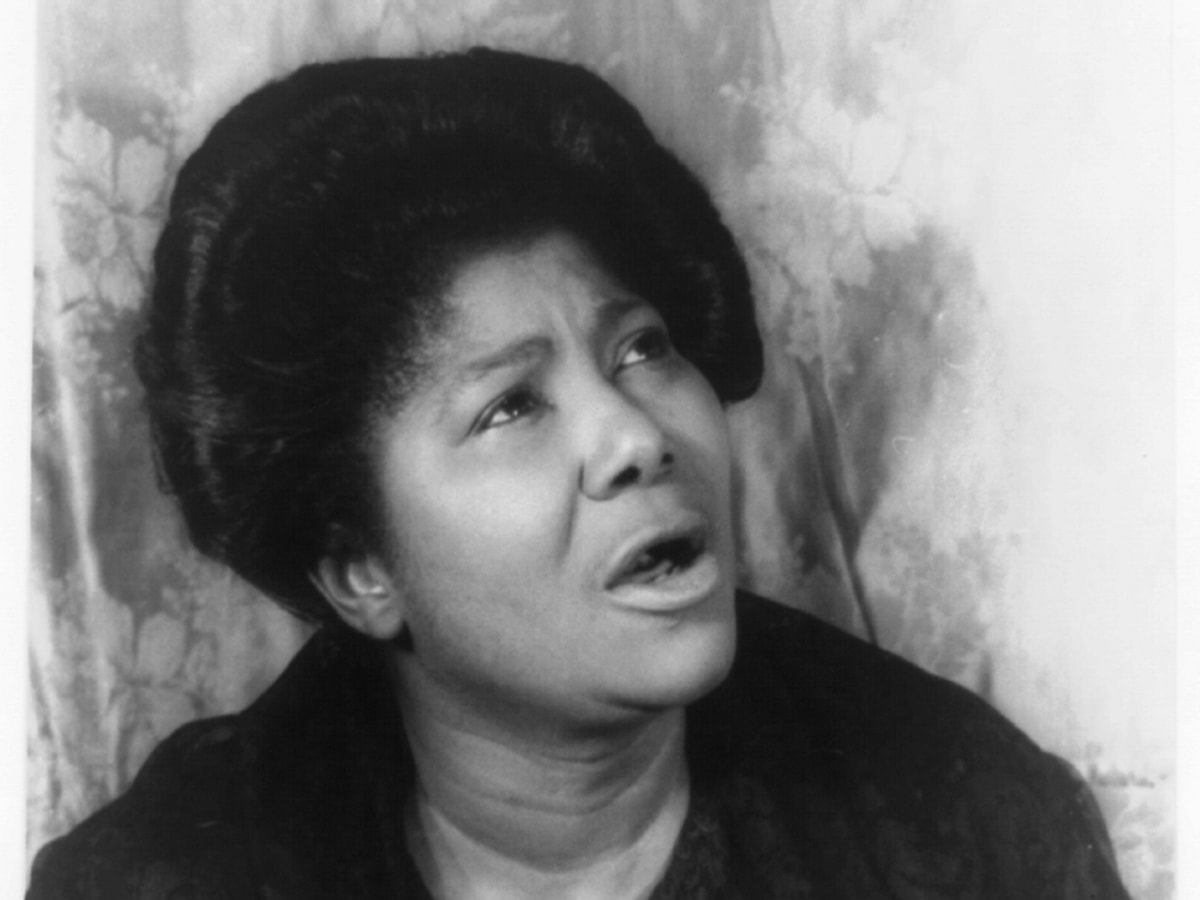
The current image is a reviewed Library of Congress portrait. Audio, lyrics, album covers, and broadcast stills require separate rights review before public display.
The next layer for a fuller feature would be a rights-reviewed performance chronology, with each event tied to a source holder and each media item cleared before display. Until then, the page should keep readers focused on public memory, institutional context, and the limits of the available source trail.
Source notes and correction path
Published source brief. Sources include Smithsonian and Library of Congress records; audio and image reuse need separate rights review.