A Black church is never only a building.
It can be a sanctuary, schoolroom, political hall, music room, meeting place, burial marker, and local archive. It can carry names that never entered the county history. It can preserve a public record where official institutions were late, hostile, incomplete, or silent.
That is why CultureUp treats Black churches as public-memory infrastructure. The church is not background scenery for a larger story. In many places, the church is one of the clearest records left.
Why this belongs on CultureUp
CultureUp publishes Indigenous Black memory through place, records, land, churches, cemeteries, civic institutions, family continuity, local archives, music, media, and public memory. The site does not treat every Black history subject as a generic African diaspora story; it looks for rooted memory that can be followed through public evidence, local continuity, and source trails.
A church story belongs here when the record shows more than architecture. The question is not only when a building was constructed. The question is what the church held: worship, education, organizing, stewardship, names, ceremonies, minutes, music, funerals, meetings, and the community memory that moved through those acts.
The church as a record
Public memory often survives through institutions that people returned to again and again.
A courthouse may hold deeds. A cemetery may hold names. A school may hold class records. A church may hold all of that indirectly: a meeting announcement, a burial program, a choir photograph, a pulpit notice, a founding story, a fundraiser, a schoolroom, a march route, a church minute, a communion table, a Sunday service, a homecoming.
That is why church memory has to be read slowly. A church site can tell us who gathered, what the community built, what dangers it faced, how it educated children, how it organized civic life, and which records still need to be found.
The National Park Service records attached to this story show the pattern across three different places: African Meeting House in Boston, Tabernacle Baptist Church in Beaufort, and Mt. Gillard Missionary Baptist Church in Lowndes County. They do not tell every local story. They do show how Black church sites can become public-memory infrastructure.
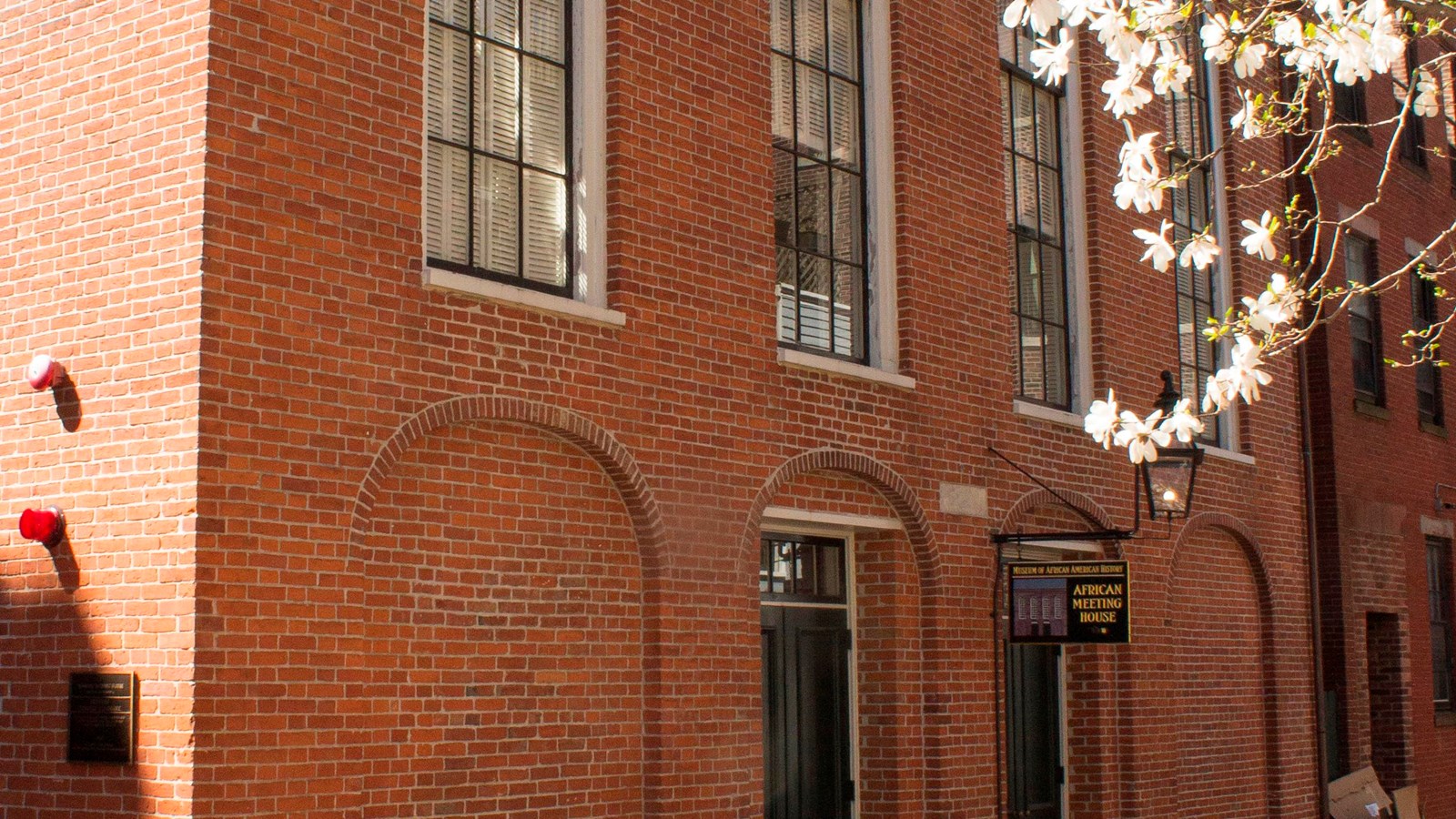
African Meeting House: a church, school, gathering place, and political room
The African Meeting House in Boston is one of the clearest examples of a church site becoming a public-memory record.
The National Park Service identifies it as the oldest surviving Black church structure in the United States. The building opened in 1806 and was built by a free African American community. NPS describes it as a church, school, gathering place, and center for political activism and cultural life.
That one record already changes how the building should be read.
If the African Meeting House is treated only as architecture, the public loses the institution. If it is treated only as a church, the public loses the schoolroom. If it is treated only as a historic landmark, the public loses the meetings, organizers, lectures, and movements that moved through it.
NPS notes that the Meeting House hosted figures and organizations connected to antislavery, women’s rights, civil rights, the Massachusetts General Colored Association, the New England Anti-Slavery Society, and the New England Freedom Association.
That is public-memory infrastructure: a place where worship, education, organizing, and community record became impossible to separate.
Tabernacle Baptist Church: Reconstruction memory in a living congregation
Tabernacle Baptist Church in Beaufort, South Carolina shows another part of the pattern.
The National Park Service describes Tabernacle as a historic Black church that served as a school and house of worship for freed African Americans during early Reconstruction. The church is also an active congregation today.
That continuity matters.
The site began in 1840 as a lecture room and meeting house. During the Civil War, the building was connected to schools operating during the Port Royal Experiment. In 1863, African American church members acquired the building and made it a church. NPS also notes that members held an Emancipation Day service meeting there in support of the Emancipation Proclamation.
This is why a church page needs more than a founding date. A founding date may locate the building in time, but it does not explain what the place carried.
Tabernacle’s record reaches into worship, education, Reconstruction, emancipation memory, church minutes, Robert Smalls, Harriet Tubman, burial memory, and present-day stewardship. NPS notes that Robert Smalls and his family attended the church; Smalls’s procession and burial were held there in 1915; and Harriet Tubman spoke on the church grounds in 1863 to people liberated during the Combahee River Raid.
A place like this is not a backdrop to Reconstruction. It is one of the institutions through which Reconstruction-era Black public life can still be read.
Mt. Gillard: civil-rights organizing had a meeting place
Mt. Gillard Missionary Baptist Church in Lowndes County, Alabama shows how church memory continued into twentieth-century organizing.
The National Park Service identifies Mt. Gillard as the oldest Black church in Lowndes County and a local center for the Civil Rights Movement. NPS says the church was established around 1820 and served as a hub for civil-rights activity during the 1960s.
In 1965, the church became home to the Lowndes County Christian Movement for Human Rights. Under Pastor Theodore Roosevelt “R.V.” Harrison, who offered the church as a meeting place, the organization created a structured platform for voting-rights and social-justice organizing.
That detail matters because public memory is not only about what happened. It is also about how people organized what happened.
A church made space. A pastor opened the door. A local organization formed. Meetings created a rhythm. People gathered after violence. The work moved from isolated registration attempts toward a more organized community effort.
NPS describes a second mass meeting that drew hundreds of people and says that the following day, volunteers went to the county jail to register to vote.
That is infrastructure. Not metaphorical infrastructure only, but real physical, civic, spiritual, and logistical infrastructure: doors, pews, calendars, voices, minutes, routes, and people willing to gather under pressure.
What the attached record supports
The attached source trail supports a careful claim: Black church sites can function as public-memory infrastructure when public records show their roles in worship, schooling, civic life, organizing, Reconstruction memory, civil-rights work, cultural life, or local continuity.
The sources do not prove the full story of every congregation. They do not replace church archives, family records, oral histories, funeral programs, meeting minutes, cemetery records, local newspapers, preservation files, or present-day stewardship review.
That limit should stay visible. It protects the story from overreach.
A National Park Service place record can help verify a site, a designation, a public interpretation, a date, a location, or a documented role. It should not be treated as the final authority on every local memory attached to a congregation.
How to read a Black church page
A strong CultureUp church story should ask: Who gathered here? What records were created here? Was the church also a school, meeting room, burial place, music space, or organizing center? Which public source verifies the claim? Which local source is still needed? Who stewards the place now? What should not be published without permission?
This is the difference between using a church as scenery and reading it as a record.
A church can hold the memory of people who built institutions when other institutions excluded them. It can hold the memory of teaching when schooling was contested. It can hold the memory of organizing when public participation was dangerous. It can hold the memory of song, mourning, homecoming, leadership, land, neighborhood, and names.
CultureUp’s job is not to flatten that into a decorative image of “the Black church.” The job is to follow the record.
What remains open
This article should be read as a method piece, not a complete history of Black churches.
A fuller version of this story would add church records, local preservation files, congregation histories, cemetery records, oral histories, newspaper accounts, school records, music history, maps, and stewardship notes. That deeper trail would allow each site to be read on its own terms instead of being used only as an example.
For now, the attached records establish the pattern: Black churches can be public-memory infrastructure, and CultureUp should treat them that way.
Source trail
Public records used in this feature
These sources support the place-record pattern. They do not replace local congregation records or community-held documentation.
| Source | Holder | What it helps verify |
|---|---|---|
| African Meeting House | National Park Service | A church, school, gathering place, and political room in Boston public memory. |
| Tabernacle Baptist Church | National Park Service | A Beaufort church connected to worship, education, Reconstruction memory, Robert Smalls, Harriet Tubman, and present-day congregation life. |
| Mt. Gillard Missionary Baptist Church | National Park Service | A Lowndes County church connected to civil-rights organizing and voting-rights public memory. |
| CultureUp Editorial Standards | CultureUp | The source, correction, media-credit, and public-evidence rules used to keep the page inside CultureUp’s lane. |
Correction path
If a reader knows a stronger source, missing credit, local archive, church-held record, preservation file, stewardship note, or correction, the source trail can be corrected rather than stretched beyond what the current record can support. Public memory gets stronger when the record improves.