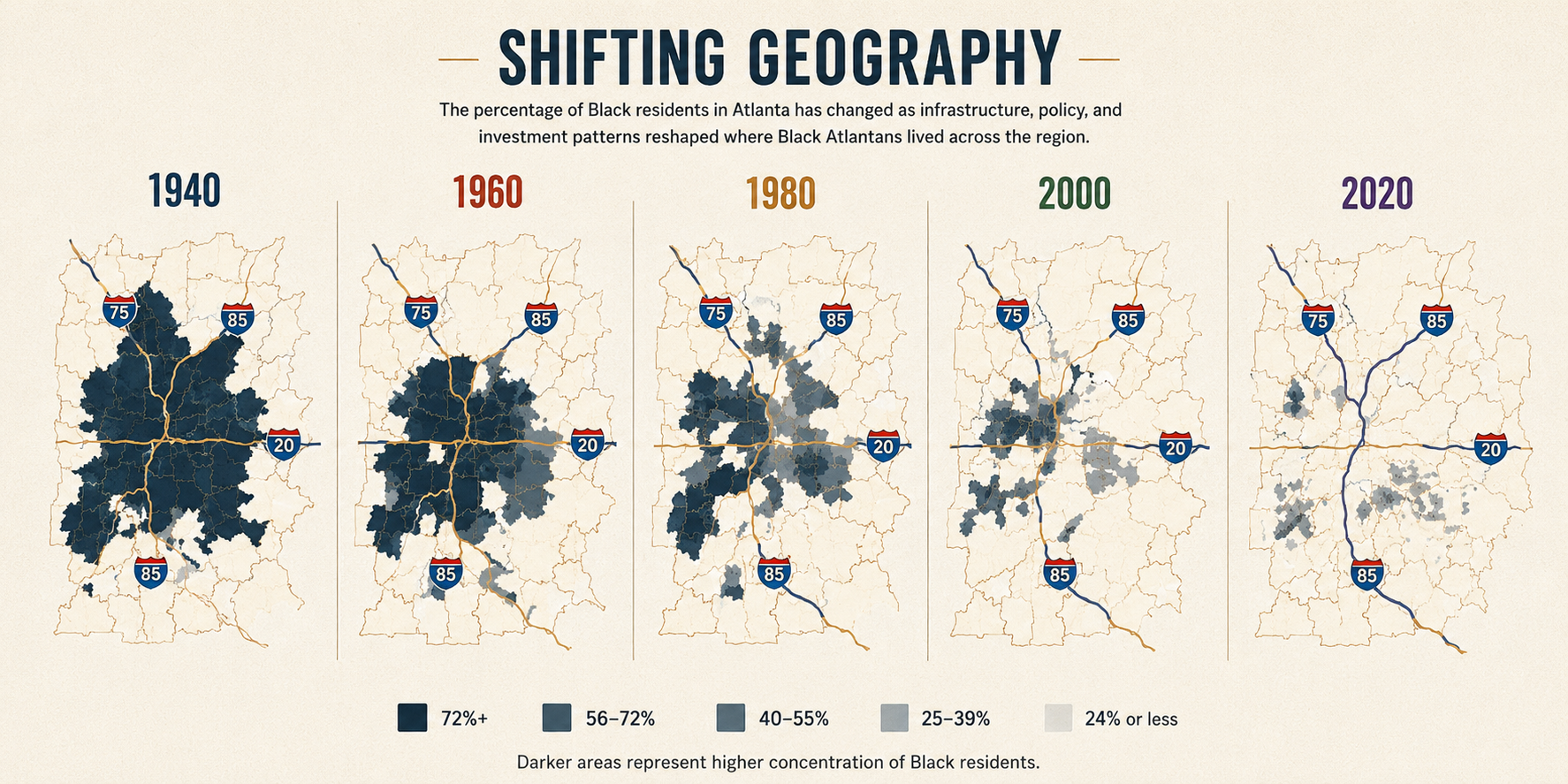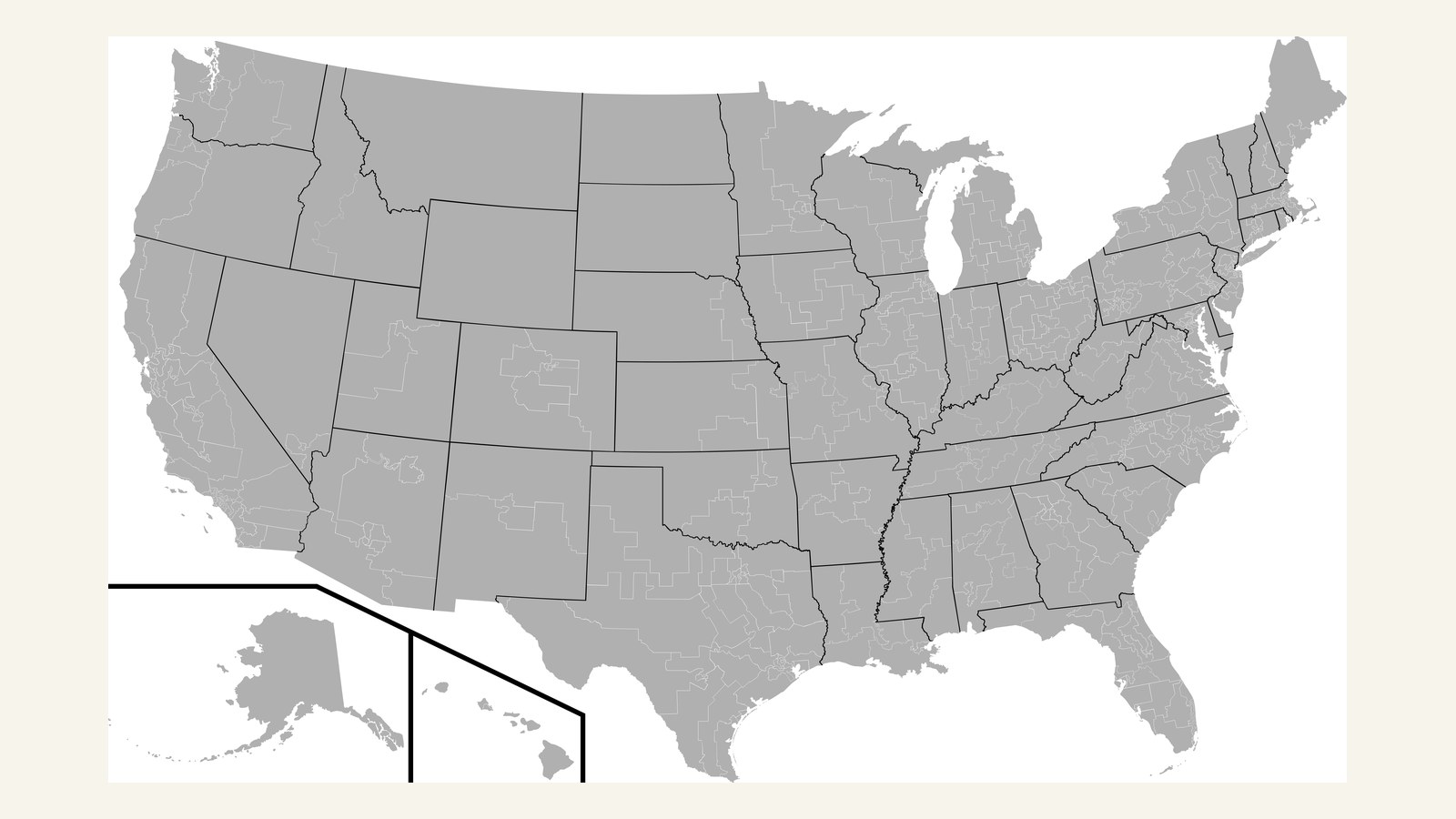
A map is never just a map. In American politics, a map decides whether a neighborhood speaks as one body or gets split into pieces. It decides whether a church community, a school district, a courthouse town, a rural Black Belt county, or a long-rooted family corridor remains politically visible.
That is why the current redistricting fight cannot be understood as ordinary party politics. It is about whether Indigenous Black civic memory, rooted in land, burial, family, churches, schools, labor, migration, records, and public life, can be broken apart by technical lines and still be expected to survive.
The old suppression announced itself at the courthouse door. The newer version may arrive as a spreadsheet.
The Supreme Court changed the ground beneath the map
On April 29, 2026, the Supreme Court issued a major ruling in Louisiana v. Callais. The Court struck down Louisiana's 2024 congressional map, which had created a second majority-Black district after earlier litigation found that Louisiana's previous map likely violated Section 2 of the Voting Rights Act. The majority held that the Voting Rights Act did not require Louisiana to create that second majority-minority district.
Section 2 has long been one of the country's core tools against vote dilution, especially after Shelby County v. Holder weakened the preclearance system connected to Section 5. The Court did not erase Section 2 on paper, but it narrowed how courts may use it in redistricting fights.
The redistricting push is not coming out of nowhere
Most congressional maps are formally drawn by states, not by the president. State legislatures usually control redistricting, though some states use commissions or other systems. But formal power is not the same as political pressure. Since 2025, the United States has seen an unusual wave of mid-decade redistricting.
After the Supreme Court ruling, Republican-led states had a stronger legal opening to defend maps as partisan rather than racial. Democrats in some states have answered with their own map strategies. The result is a national map war in which the law, the calendar, and the party balance all move at once.
A map can erase a people without ever saying their name.
The deportation theory has a real strategic core
The public record does not prove that deportation backlash is the singular motive behind every redistricting push. The stronger claim is this: redistricting is structural insurance against backlash, and one major source of possible backlash is the Trump administration's mass-deportation agenda.
The voter math matters. Pew's post-election analysis found that Donald Trump became much more competitive with Hispanic voters in 2024 than Republicans had been in prior cycles, while Black voters remained overwhelmingly Democratic. That difference changes the political calculation. Latino voters are now a more contested bloc. Black voters, nationally, remain the Democratic coalition's most loyal base.
That does not mean Latino communities are protected from map manipulation. It means they are politically complicated in a way Black districts are not. If immigration enforcement risks backlash among some Latino voters, redistricting offers a way to reduce the risk before backlash fully reaches the ballot box.
Deportation does not only touch the deported
Undocumented immigrants do not vote in federal elections, so mass deportation does not directly remove noncitizen votes from the ballot. But politics does not only move through individual ballots. Deportation touches households, mixed-status families, workplaces, churches, neighborhoods, schools, and local economies. It can create fear, anger, withdrawal, mobilization, or political realignment among people who do have the right to vote.
It also touches representation through population. The Census counts residents for apportionment purposes, including citizens and noncitizens. Congressional representation is tied to people living in a place, not only to registered voters. Immigration policy, census politics, and district maps are not the same issue, but they belong to the same machinery of representation.
Why Black districts carry more than party value
For CultureUp, the central issue is not simply that one party may gain or lose seats. The deeper story is what happens when long-rooted Black communities are treated as disposable units in a partisan game. A majority-Black or Black-opportunity district is not merely a party asset. In many places, it is the product of generations of exclusion, litigation, organizing, burial memory, church networks, local institutions, migration routes, family names, and hard-won public recognition. It is a civic memory structure.
When that district is cracked, the loss is not only electoral. The community loses a representative voice tied to its place. It loses leverage over roads, schools, hospitals, environmental policy, housing, disaster recovery, federal grants, and local appointments. It loses someone who can speak from inside the memory of the district rather than from outside it.
The new suppression speaks the language of neutrality
The modern mapmaker does not need to say Black. He can say compactness. He does not need to say suppression. He can say partisan advantage. He does not need to say erasure. He can say incumbency protection. He does not need to say power. He can say efficiency.
This is what makes the moment so serious. The Court's ruling gives states more room to defend maps on nonracial grounds, even where those maps weaken minority political power. The majority frames that as a constitutional guardrail against racial sorting. That concern cannot be dismissed. Government should not casually classify citizens by race. But in the real world, racial history is embedded in geography. Black towns, Black neighborhoods, Black Belt counties, church corridors, cemetery communities, and courthouse migration routes are living residues of law, labor, exclusion, survival, and settlement.
The real meaning of the moment
The redistricting push is about House control. That is the surface story. The CultureUp reading goes deeper: this is about a political system learning how to weaken Black public power without using the old vocabulary. It is about converting racial harm into partisan explanation. It is about telling Black communities that their districts are not being dismantled because they are Black, only because they vote wrong.
The right to vote does not live only in a ballot box. It lives in the map that decides whether the ballot can join with others and become power. For long-rooted Black communities, that power was never given freely. It was organized, buried, rebuilt, litigated, remembered, and defended. That is why the map matters. The map is the memory, and memory must not be redrawn out of existence.