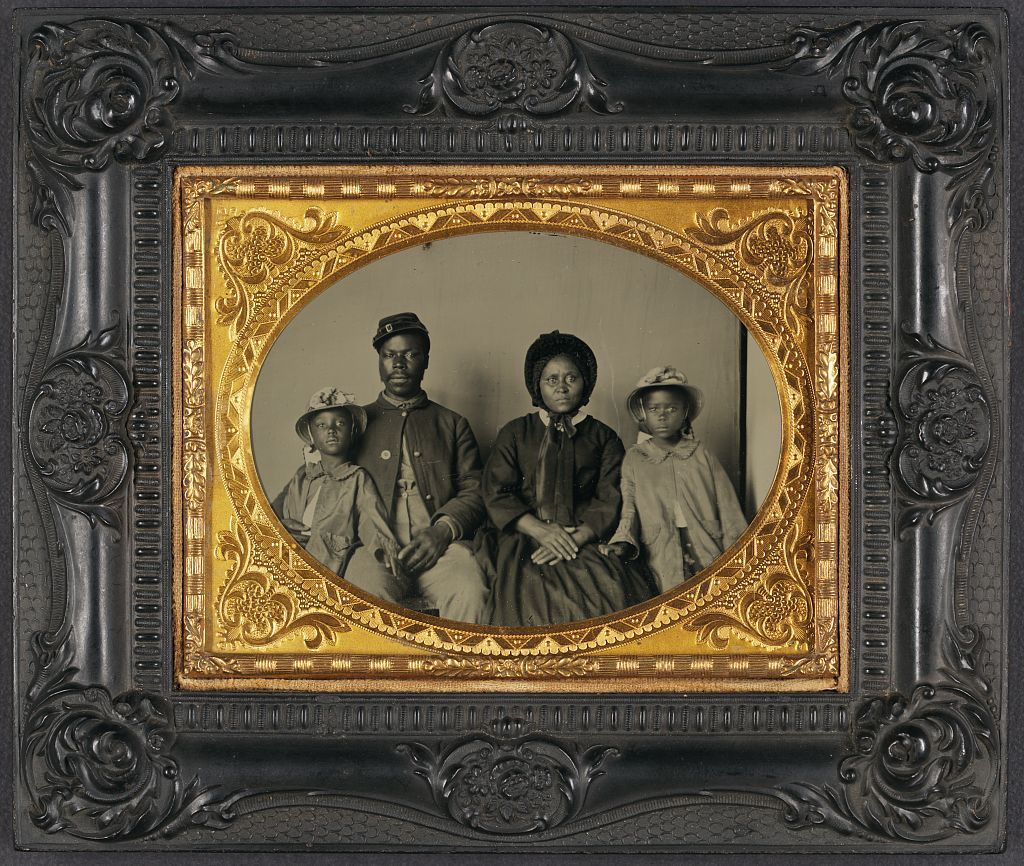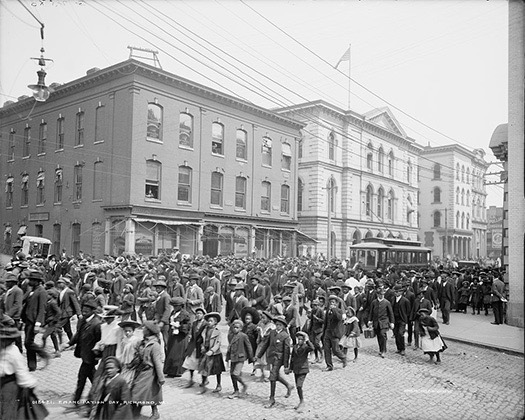
Juneteenth begins with a document, but it does not stay on paper.
On June 19, 1865, Union Major General Gordon Granger issued General Order No. 3 in Galveston, Texas, informing enslaved people in the state that they were free. The National Archives preserves the handwritten record and identifies Juneteenth as Freedom Day or Emancipation Day, one of the country’s oldest known celebrations commemorating the end of slavery in the United States.
But Juneteenth did not become sacred because a government order was read aloud. It became sacred because Black people remembered it, gathered around it, fed one another through it, taught children through it, and built places where the day could not easily be erased.
Juneteenth is not only a holiday. It is a Black American memory system. It marks the distance between legal words and lived freedom. It also marks what Black communities did after freedom was announced: they organized, bought land, built institutions, created traditions, and made the memory public.
A park turned freedom into infrastructure
In Houston, that work became visible in a place. Emancipation Park, located in Houston’s historic Third Ward, was established in 1872 by formerly enslaved people as a permanent site for Juneteenth celebrations. Reverend Jack Yates, Richard Allen, Richard Brock, and Reverend Elias Dibble are remembered among the community leaders connected to the land purchase.
That purchase matters. It turns Juneteenth from a date into infrastructure.
A community that had been denied freedom did not merely wait to be included in someone else’s public square. It created one. It put memory on land. It gave celebration an address. It made a future gathering place out of a past wound.
The modern marketplace is not a side attraction
That is why the modern Juneteenth marketplace deserves more attention than it usually receives.
At its weakest, a marketplace can look like a row of tents. At its strongest, it is a local economy in public view. It lets a family discover a business it did not know existed. It lets a young person see ownership as normal. It lets a vendor test a product, meet customers, collect emails, make sales, and become part of a community’s recurring calendar.
In 2026, that pattern is visible in several places.
Maryland: culture, commerce, and community visibility
At National Harbor in Prince George’s County, Maryland, the Fifth Annual Juneteenth Freedom Celebration was scheduled for June 19, 2026, as a free public event with a Black-owned marketplace in the Capital Canopy. National Harbor said the marketplace would feature more than 30 vendors offering products such as clothing, accessories, skin care, and cultural cuisine, alongside live entertainment and an educational Juneteenth timeline.
The Prince George’s County Economic Development Corporation framed the same event as more than cultural recognition, describing Juneteenth as a driver of local business visibility, revenue generation, and community-based economic growth.
That is the language of economic development, but it is also the language of memory becoming practical.
Atlanta: a vendor village as a youth map
In Atlanta, Juneteenth at the Grove Park Celebration positioned the same idea in the city’s Westside. The event page described a June 19, 2026 gathering at Grove Park Foundation with free general admission, 100 vendor spaces, and more than 5,000 expected guests. It called the event a cultural experience rooted in freedom, flavor, and the soul of Atlanta’s Westside, with a Black Vendor Village, cultural programming, live performance, and a Youth Zone.
The youth detail is important.
A Juneteenth marketplace is not only about who sells today. It is about who learns what ownership looks like before adulthood. It is about a child walking past tables of Black-owned food brands, authors, wellness workers, apparel designers, photographers, educators, and service providers, then understanding that business is not abstract.
A strong Juneteenth event gives the next generation more than entertainment. It gives them a map.
Chicago: creativity, ownership, and circulation
Chicago’s ROOTED Juneteenth Cultural Experience carries the same idea through fashion, entrepreneurship, and creative ownership. ROOTED describes itself as a platform built to center Black creativity, Black business, Black expression, and Black economic circulation, with a mission to create visibility and revenue-generating opportunities for designers, vendors, entrepreneurs, and creators.
That last word is the key: circulation.
A dollar spent at a Juneteenth marketplace is not magically transformative by itself. But repeated circulation builds recognition. Recognition builds trust. Trust builds repeat business. Repeat business builds stability. Stability gives families more room to plan, hire, teach, sponsor, donate, preserve, and return.
The business story is real
This is where the feel-good story becomes a serious business story.
Brookings’ 2026 update to the Black Business Parity Dashboard reported that from 2017 to 2023, the number of Black-owned employer businesses grew by 62%, surpassing 200,000 firms. In 2023, those businesses generated $249 billion in revenue, supplied more than 1.8 million jobs, and paid $69.8 billion in salaries.
Those numbers do not mean every Juneteenth vendor tent becomes a major employer. They do show that Black-owned businesses are part of a larger growth story worth taking seriously. The marketplace at a Juneteenth celebration is one visible point in that wider ecosystem. It is where culture, customer discovery, public gathering, and local reinvestment can meet.
Commerce should serve the memory
Food is memory. Clothing is memory. Books are memory. Hair care is memory. Art is memory. A candle scent, a family recipe, a T-shirt design, a children’s book, a genealogy service, a local tour, a wellness product, or a photographer’s booth can all carry fragments of community identity.
The challenge is to keep the order right.
Juneteenth should not be flattened into shopping. The marketplace should serve the memory, not replace it. The best celebrations understand this. They begin with history, elders, ceremony, education, prayer, music, or public reflection. Then commerce enters as part of the living tradition: families buying from families, neighbors discovering neighbors, and entrepreneurs being seen by the community whose memory they help carry.
Continuity, not accident
The people who built Emancipation Park were not only commemorating freedom. They were organizing resources, exercising property rights, and creating a permanent civic asset. They turned remembrance into land stewardship. They turned gathering into institution-building.
Today’s best Juneteenth marketplaces carry that older logic forward.
They say: gather here. Buy here. Remember here. Teach here. Build here. Let the children see what we own, not only what we survived.
This is the part of Juneteenth that can feel especially hopeful in 2026. Not because the work is finished. Not because public memory is safe from erasure. Not because Black-owned businesses no longer face gaps in access, capital, visibility, or scale. The hope is more disciplined than that.
The hope is that Black communities keep turning memory into usable forms. A park. A church anniversary. A family reunion. A parade route. A vendor market. A youth stage. A source trail. A local business directory. A cultural timeline. A food tent. A runway. A reading circle. A public record. A place to return.
Juneteenth is not only a reminder that freedom was delayed.
It is a reminder that once Black people had room to move, they moved with intention. They gathered. They named the day. They bought land. They fed families. They made music. They built institutions. They created a holiday powerful enough to travel across generations.
And now, in cities and counties across the country, the marketplace keeps appearing beside the memory.
Freedom has a date. Freedom has a document. Freedom has a song. Freedom has a park. And when a Black-owned vendor opens a table under a Juneteenth tent, freedom also has a marketplace.