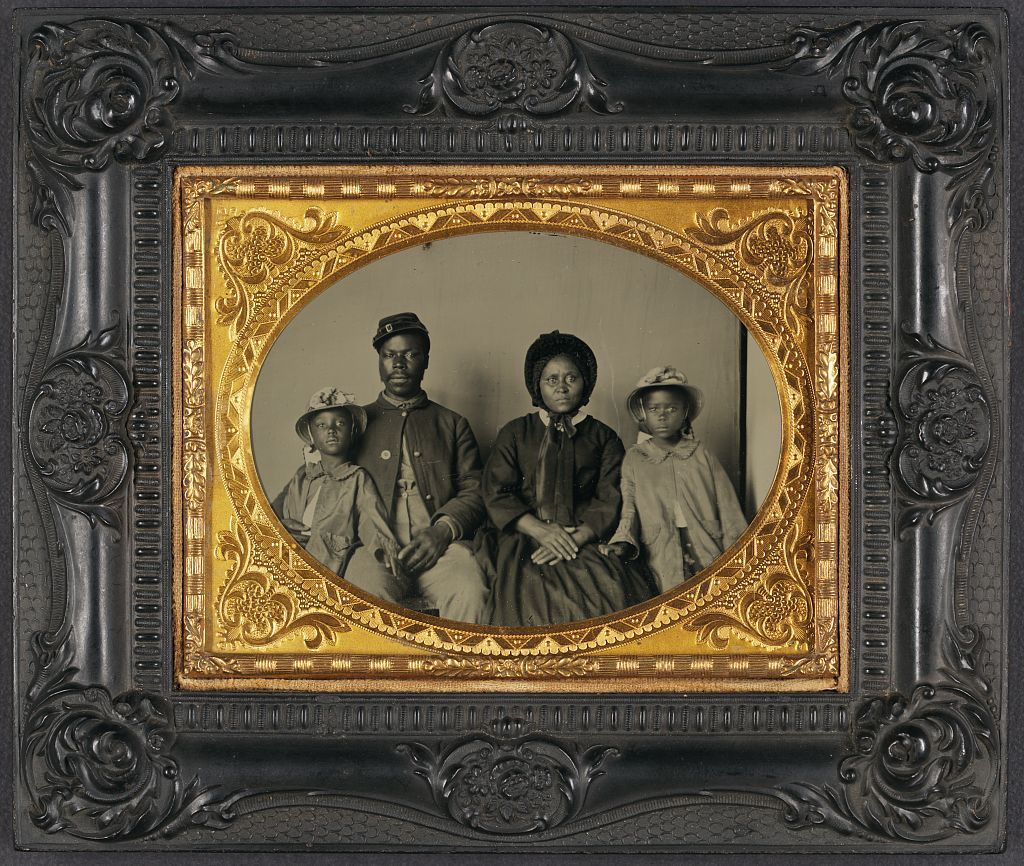
There is a kind of exhaustion that comes from constantly having to explain who you are. Black Americans know that exhaustion well. It is not only the fatigue of racism. It is the fatigue of being renamed, measured, categorized, corrected, absorbed, and spoken over.
For generations, Black Americans have moved through official language that changed with law, politics, census practice, local custom, school records, church records, and the habits of officials who often wrote names and categories from the outside. Colored, Negro, Black, African American, Mulatto, Indian, and other terms appear in the record. Those labels matter. But they are not the whole person, and they are not always the people’s own name for themselves.
The question has been backwards
The public conversation often asks why Black Americans do not know who they are. That question starts from the wrong assumption. Many Black Americans are not beginning from emptiness. They are beginning from family names, land, churches, cemeteries, court records, school rosters, military files, census pages, funeral programs, oral memory, migration routes, and communities that stayed together long after outsiders assumed the memory had disappeared.
Black Americans are not lost. Many are finally able to document what their elders knew all along.
The record did not erase us
Black Americans have been forced to recover history from systems that were not designed to honor them. That is different from not having a history. For many families affected by slavery, the 1870 census is a major public-record threshold because formerly enslaved people appear by name in a national census after emancipation.
But 1870 is not the only record lane. Freedmen’s Bureau records can include labor contracts, marriages, schools, hospitals, rations, transportation, complaints, military claims, pensions, legal matters, relief records, and other documents that place names, families, churches, work, schooling, health, mobility, and local conflict into public view.
A people can be over-labeled and still know themselves
Official categories are useful, but they are not sacred. Pew Research Center’s review of U.S. census race categories shows that the language and choices used to measure race have changed repeatedly across time. A census category can tell us how a government counted a person. It does not necessarily tell us how that person prayed, cooked, buried the dead, named children, chose kin, kept land, understood bloodline, or remembered origin.
Place memory is identity
There are many places like Montezuma. Some are towns. Some are rural districts. Some are church neighborhoods. Some are river communities. Some are cemetery clusters. Some are roads where the same surnames appear again and again across census pages, tax rolls, marriage records, military registrations, funeral programs, and church minutes. A place like Montezuma is not just geography. It is a memory container.
The immigrant story is not the same story
African-born and Caribbean-born Black people have their own histories. Those histories matter. They deserve their own careful memory lanes. But they are not identical to the long-rooted Black American story. A family that recently came from Nigeria, Ghana, Jamaica, Haiti, Trinidad, Guyana, Barbados, Ethiopia, Somalia, or elsewhere may know a country, language, clan, island, village, parish, or migration story that a long-rooted Black American family does not know in the same way. The reverse is also true.
The claim that Black Americans do not know who they are is no longer credible
A people who can produce names across generations knows something. A people who can identify churches, cemeteries, land records, military records, Freedmen’s Bureau files, marriage certificates, census households, town roads, oral histories, migration routes, and family clusters knows something. A people who can show that a grandmother’s story matches a census page knows something.
Identity fatigue is real
There is a particular cruelty in asking an overburdened people to carry one more burden: the burden of proving that their self-definition is valid. Black Americans have already carried enough. They should not also have to carry a permanent identity interrogation.
What CultureUp means by a source trail
Evidence lanes for long-rooted Black American memory
No single lane carries the whole person. CultureUp reads the lanes together and keeps nonpublic materials separate from public claims.
| Lane | What it can show | What it cannot do alone |
|---|---|---|
| Census records | Households, names, ages, places, categories, occupations, literacy, and movement across decades. | They cannot fully define self-identity, culture, prayer, kinship, or community meaning. |
| Church records | Membership, baptisms, marriages, funerals, schools, revivals, leadership, music, and community continuity. | They may omit nonmembers, private practice, or informal family memory. |
| Cemetery records | Names, dates, family clusters, burial places, grave customs, church ties, and local continuity. | They may not explain the full life, origin, or identity of the buried person. |
| Land and tax records | Property, proximity, inheritance, routes, dispossession, and durable place attachment. | They cannot tell the entire cultural or spiritual story by themselves. |
| Oral history | Family memory, local names, routes, warnings, prayers, recipes, songs, and meanings records may miss. | It must be labeled carefully and should not be forced to carry public proof alone. |
Montezuma is not an exception
Every long-rooted Black American place deserves a memory review. Montezuma. The Sea Islands. The Black Belt counties. The old free Black settlements. The church towns. The railroad towns. The river communities. The plantation-edge neighborhoods. The Reconstruction school districts. The burial grounds that sit behind churches, inside woods, beside roads, or under development pressure. These places should not be treated as footnotes. They are archives.
The public narrative has to change
Black Americans are not blank people waiting for someone else to give them a past. They are a people whose memory has been pressured, renamed, hidden, and scattered, but not extinguished. The proper answer to identity fatigue is not another label. The proper answer is evidence, memory, place, and rest.
We are not lost. We are returning to what was always ours.
Correction path
If a reader knows a stronger source, missing record, local archive, church-held document, cemetery source, oral-history lead, or correction, the source trail can be improved. CultureUp’s position is not that the record is finished. The position is that Black American memory deserves to be read from its own evidence.