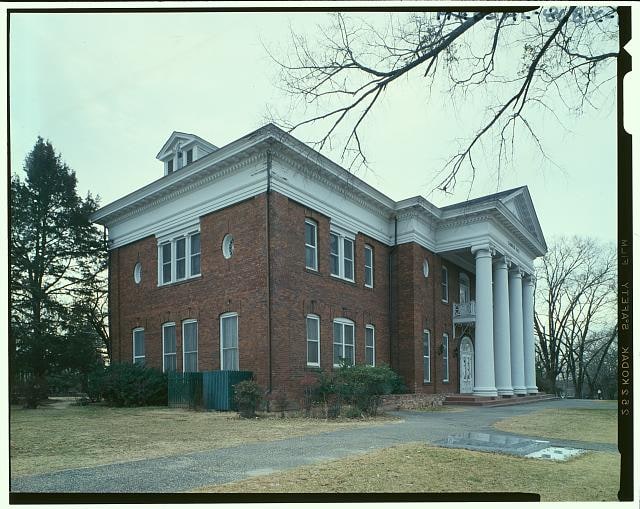
A hospital can be remembered as a building, but a Black hospital was often much more than a building.
It could be a place to receive care when another hospital refused admission. It could be the only nearby institution where a Black physician could admit a patient, perform an operation, complete an internship, or hold staff privileges. It could train nurses, employ pharmacists, laboratory workers, cooks, orderlies, administrators, and maintenance staff. It could anchor fundraising campaigns, professional societies, church networks, newspaper advocacy, and civic arguments about who deserved public investment.
That is why CultureUp should read Black hospitals as community infrastructure. The phrase does not romanticize segregation or suggest that separate systems were an acceptable substitute for equal access. It identifies what communities had to build, govern, finance, and defend when American medicine restricted Black patients and professionals.
There was no single Black-hospital model
The term Black hospital can describe different institutions. Some were founded and controlled by Black physicians or community boards. Some were connected to churches, colleges, or nursing schools. Some were public hospitals created as segregated facilities. Some were federal institutions reserved for Black patients. Others were interracial in formal policy but founded because Black doctors, nurses, or patients were excluded elsewhere.
Those differences matter. Ownership, governance, patient admission, staff privileges, funding, accreditation, training programs, and service area should be reported separately. A hospital may have served a predominantly Black community without being Black-controlled. Another may have employed Black professionals while remaining part of a segregated public system. The category is useful only when the article names the institution’s actual structure.
Historian Vanessa Northington Gamble places the growth of Black hospitals inside a wider reform movement shaped by discrimination in patient care, professional access, medical education, philanthropy, and public policy. The National Medical Association’s own history similarly records that Black physicians established hospitals and training systems while fighting unequal accommodations and exclusion from medical institutions.
Care and professional authority had to share the same address
Hospital access affected more than where a patient slept. Modern hospital practice increasingly shaped medical education, specialty training, professional reputation, and the ability of physicians to care for their own patients. When Black physicians were denied staff privileges or internships, exclusion from the hospital could limit an entire career.
A Black hospital therefore often solved several problems at once. It created beds for patients, clinical experience for students, positions for nurses, admission rights for physicians, and a public institution through which a community could demand standards of care. That combination is what made the hospital infrastructure rather than simply a site of treatment.
The infrastructure inside a Black hospital
| Function | What the institution could hold |
|---|---|
| Patient care | Beds, surgery, maternity care, emergency treatment, outpatient services, pharmacy and laboratory work |
| Professional training | Nursing schools, internships, residencies, clinical teaching and specialty experience |
| Employment | Physicians, nurses, pharmacists, technicians, administrators, food service, maintenance and support work |
| Professional authority | Staff privileges, referrals, medical leadership, research, publication and association networks |
| Community capacity | Fundraising, volunteer auxiliaries, church and newspaper support, public-health campaigns and trusted care routes |
| Public memory | Annual reports, patient registers, staff photographs, school catalogs, board minutes, building records and closure debates |
Provident Hospital joined care, training, and Black professional opportunity
Provident Hospital in Chicago is one of the clearest examples. Daniel Hale Williams organized Provident Hospital and Training School for Nurses in 1891. Local historical and Cook County records describe an institution created so Black patients would be welcomed and Black medical professionals could work and train.
Provident’s importance cannot be reduced to a list of medical “firsts.” Its deeper significance was institutional. It gave Black nurses a training route in Chicago, gave physicians a place to practice, and served communities on the South Side. It also depended on fundraising, patient payments, charity, affiliations, and changing public policy—an economic structure that made its mission possible but vulnerable.
The hospital’s independent era ended after severe financial difficulty. It closed in 1987, and Cook County later acquired and reopened the facility in 1993 as part of the public health system. That history shows why a hospital story needs a timeline of governance as well as a founding date. “Provident Hospital” names a continuing legacy, but ownership, financing, institutional authority, and public role changed over time.
Freedmen’s Hospital tied patient care to Black medical education
Freedmen’s Hospital in Washington, D.C., grew from the post–Civil War federal system that treated formerly enslaved people and other Black residents. It became closely connected to Howard University’s medical education system and served as a major clinical training site for Black physicians and nurses.
The National Library of Medicine records that the hospital was transferred to Howard University in 1967 and remained in use until the modern Howard University Hospital opened in 1975. Howard describes the present hospital as continuing the community-service and teaching legacy of Freedmen’s Hospital.
The continuity is institutional rather than architectural alone. A hospital attached to a medical school can carry clinical teaching, faculty practice, patient care, research, professional networks, and a record of who entered the profession. The old building, the replacement hospital, the university archives, and the training lineage all belong in the story.
Homer G. Phillips Hospital was municipal infrastructure won through political struggle
Homer G. Phillips Hospital in St. Louis represents a different model: a major public hospital built for the city’s Black community under segregation. The City of St. Louis describes the institution as the result of a long campaign for funding and notes that it served Black residents while training large numbers of physicians and nurses during the decades it operated.
A public hospital of that scale could become a city within a city. It concentrated jobs, clinical training, administration, food service, laboratories, nursing leadership, and professional advancement in a neighborhood. The staff and students carried the institution’s influence beyond its walls into private practices, public-health work, schools, families, and other hospitals.
Homer G. Phillips was reduced to outpatient and emergency service in 1979 and ceased operating as the full-service hospital the community had known. The surviving building later became senior housing. A preservation page can document the landmark, but a health-memory article must also ask what happened to the services, training routes, staff, patient relationships, and records when the hospital closed.
Tuskegee’s veterans hospital made federal employment part of the care system
The Veterans hospital at Tuskegee shows how a hospital could also operate as a major professional and civic campus. The federal facility opened in 1923 for Black veterans. VA history records that Black physicians and nurses staffed the hospital and that Joseph H. Ward became the first Black hospital director in VA history.
The staffing decision was contested by white supremacists, but the institution created positions in medicine, nursing, pharmacy, administration, and support work for Black professionals. VA records also describe the campus as a close community in which staff families, professional mentorship, recreation, and local life grew around the hospital.
This does not make a segregated veterans system equitable. Black veterans should not have needed a separate institution to obtain care or Black professionals to obtain federal medical employment. But once the hospital existed, the all-Black staff and leadership became part of the historical record of professional authority, federal service, and community formation.
Nursing schools made hospitals intergenerational institutions
Black hospital history is inseparable from Black nursing history. Saint Agnes Hospital in Raleigh, founded in 1896 on the campus of what is now Saint Augustine’s University, served Black patients regionally and trained Black nurses. The university now treats the surviving site as a historic asset requiring preservation and reinterpretation.
Training programs mattered because nursing schools joined classroom instruction, clinical work, housing, discipline, mentorship, and employment placement. A hospital could prepare one cohort, which then staffed hospitals, public-health programs, military services, schools, and private homes across a much wider geography.
The nursing-school record also requires care. Early curricula can reflect both professional opportunity and the racialized, gendered labor expectations of the period. A flagship article should not celebrate training without examining working conditions, accreditation, compensation, authority, and the limits placed on Black nurses.
Community infrastructure still depended on money and power
Black hospitals were often asked to serve patients who had limited ability to pay while operating inside financing and accreditation systems that did not distribute resources equally. They relied on combinations of patient fees, charity, churches, auxiliaries, philanthropies, public appropriations, insurance reimbursements, college support, and professional labor.
That financial structure could be unstable. Provident’s long history included recurring financial pressure. Homer G. Phillips emerged from a political fight over public funding. Saint Agnes depended heavily on fundraising and institutional support. Flint-Goodridge Hospital in New Orleans, whose records are preserved by Dillard University, faced a difficult transition as desegregation altered patient and physician patterns while reimbursement and capital needs remained challenging.
The lesson is not that Black institutions failed because they were Black. The better question is what obligations they were expected to carry, which revenue they could access, which facilities received investment, how accreditation standards were financed, which insured patients could choose other hospitals, and whether the institution had enough capital to modernize.
Hospital desegregation was a civil-rights victory
Any account of Black-hospital decline must state this clearly: ending legally enforced and institutionally maintained hospital segregation was necessary. Black patients and professionals were entitled to admission, equal services, training positions, employment, and staff privileges throughout the health system.
Court challenges, civil-rights organizing, Title VI of the Civil Rights Act, and Medicare certification changed hospital practice. Historical analyses of Medicare implementation describe federal teams inspecting facilities and requiring nondiscrimination as a condition of participation. By the launch of Medicare in July 1966, most hospitals had been deemed compliant, and formal segregation was rapidly dismantled.
That achievement expanded access and professional opportunity. It should not be rewritten as a mistake because some Black hospitals later closed. The historical problem is not integration. The problem is that institutional transition occurred in an unequal financial and geographic system, and communities did not always retain the assets, leadership, jobs, trust, or local access that their hospitals had carried.
Closure was not only a change of address
The National Academies’ Unequal Treatment report summarized research finding that dozens of Black hospitals closed or merged between 1961 and 1988. It described losses that included geographic convenience, familiar institutions, employment, and access. Those effects are infrastructure effects.
A closure can remove inpatient beds, but it can also break referral relationships, eliminate a nearby emergency department, end a nursing school, disperse archives, reduce local purchasing, move jobs, and weaken a place where Black professionals held authority. A merger can preserve some clinical services while changing governance and community control. A replacement hospital can improve technology while relocating care.
Flint-Goodridge offers a documented example of these tensions. Scholarship on the New Orleans hospital describes how legal desegregation did not erase the two-tiered health system and how the hospital’s finances were strained as patient and physician patterns changed. Its 1985 closure cannot be explained by one cause, but it shows why integration, reimbursement, capital, professional movement, and community access must be studied together.
How to reconstruct a Black hospital as infrastructure
The strongest hospital article begins with more than a founder and a landmark photograph. It identifies the service area, governance model, funding sources, number and type of beds, clinical departments, training programs, admission policies, staff privileges, patient population, professional associations, community campaigns, accreditation history, and closure or merger record.
Reader verification card for a Black hospital story
| Question | Evidence route |
|---|---|
| Who controlled the institution? | Charter, board minutes, annual reports, public appropriations, university or church records |
| Who could receive care? | Admission policies, patient registers, newspaper notices, public-health reports and oral histories |
| Who could practice and train? | Staff rosters, medical-school catalogs, nursing-school records, internship and residency documents |
| How was it financed? | Budgets, charity reports, insurance records, bond issues, philanthropy, public funding and reimbursement |
| What did it contribute locally? | Employment records, directories, auxiliaries, community programs, pharmacies, clinics and referral networks |
| What changed at integration, merger or closure? | Service maps, board decisions, court records, accreditation files, staff movement and community response |
| What survives? | Building, archive, museum, alumni network, current hospital, oral history, cemetery and correction route |
The article should also preserve distinctions among established facts, institutional self-description, scholarly interpretation, and community memory. Hospital anniversary pages are useful for dates and continuity claims, but they may emphasize institutional pride. Closure debates may emphasize either efficiency or loss. A CultureUp source trail should keep those interests visible.
What the record can and cannot show
The public record supports a careful conclusion: Black hospitals frequently functioned as combined systems of patient care, medical and nursing education, employment, professional authority, civic organizing, and local memory. Their forms varied, and their existence reflected both racial exclusion and Black institution-building.
The record does not support treating every Black hospital as equally controlled, equally funded, or equally effective. It does not prove that separate care was acceptable, that integration caused every closure, or that preserving a historic building preserves the health infrastructure that once operated inside it. Those claims require institution-specific evidence.
A hospital archive is also a community archive
Black hospital records can preserve names, careers, photographs, school cohorts, board decisions, patient-service patterns, public-health campaigns, and debates about public investment. When the institution closes, those records can scatter across universities, city archives, private collections, successor hospitals, museums, alumni groups, and family papers.
CultureUp’s task is to follow that trail without turning the hospital into a monument detached from care. The building matters. The people who trained there matter. The patients and neighborhoods matter. The financing and civil-rights struggle matter. The closure record matters. Together they show why Black hospitals were community infrastructure.