The cones on I-285 tell one version of Atlanta's World Cup story. A full weekend closure on the west side of the Perimeter shut down both directions between Martin Luther King Jr. Drive and Cascade Road while crews moved through a larger westside reconstruction project. For many residents, that kind of road work feels like the ordinary price of living in a city that is always preparing for the next big arrival.
But the bigger story is not the detour. It is the invitation. FIFA World Cup 2026 will bring fans, teams, languages, flags, food traditions, and family stories from across the world into a city that has long been a capital of Black American culture and a gateway for global communities. Atlanta is not simply hosting the world. Atlanta is being asked to explain itself to the world.
The match will bring people to Atlanta. The city itself should make them stay curious.
That means the best Atlanta World Cup experience cannot end at the stadium gate. The real visitor guide should connect the tournament to the city around it: Sweet Auburn, the King historic district, the Atlanta University Center, Black churches, gospel and hip hop legacies, immigrant food corridors, refugee communities, public art, neighborhood change, and the complicated question of how a Southern city serves many cultures without losing the culture that made it known.
The detour is only the surface
Atlanta's transportation story has always been part of its identity. The city grew from rail, highways, airport movement, conventions, sporting events, and the steady motion of people chasing opportunity. That is why road work before a global event feels symbolic. It reminds everyone that hospitality depends on infrastructure. Visitors experience the welcome, but residents often experience the preparation first.
That is also why Atlanta should not let the World Cup become only a spectacle for guests. The city has already framed parts of its tournament planning around human rights, accessibility, youth opportunity, and community benefit. That public language matters because major events can either pass through a city or strengthen the people who live there.
Start in the stadium, then leave the stadium
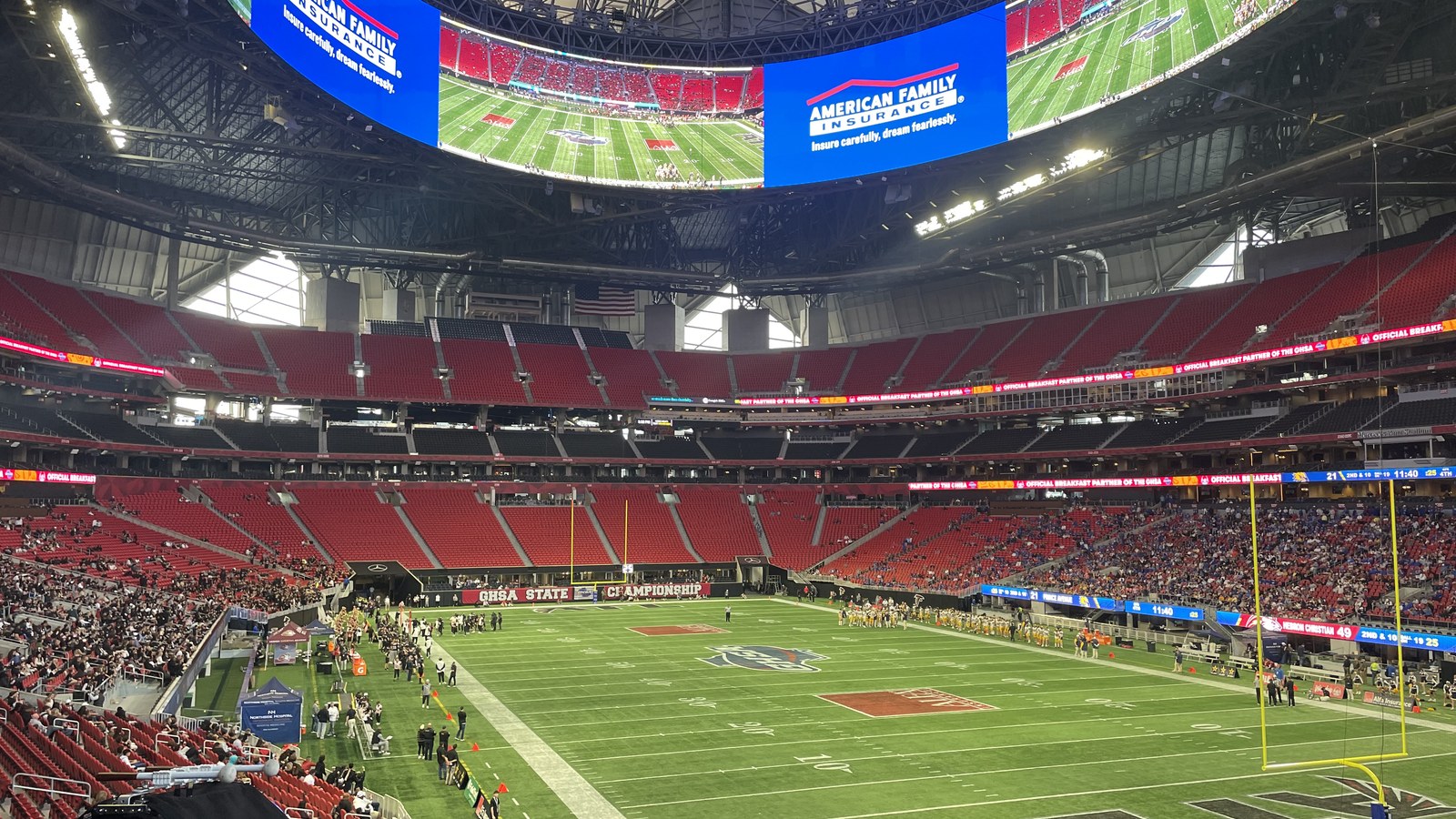
Atlanta Stadium will be one of the most visible stages of World Cup 2026. Matches will bring a global television audience, local pride, and a powerful sense of occasion into downtown. Centennial Olympic Park will also matter because it links the World Cup to the memory of the 1996 Summer Olympics, another moment when Atlanta had to translate itself for the world.
The stadium and fan festival should be treated as the center of movement, not the full meaning of the visit. From downtown, a traveler can move a short distance into one of the most important public memory corridors in America. That is where Atlanta becomes more than a host city. It becomes a classroom.
Walk east into Sweet Auburn
To understand Atlanta, go to Sweet Auburn. This is not a side attraction. It is one of the strongest ways to understand what Atlanta was, what it fought through, and why Black American culture is central to the city's identity.
The Martin Luther King Jr. National Historical Park connects visitors to Dr. King's birth home, Ebenezer Baptist Church, The King Center, and the streets that shaped a major chapter of the modern civil rights movement. But Sweet Auburn should not be reduced to a single great man or a single moral lesson. It also tells a story of Black business, Black churches, Black journalism, Black education, Black nightlife, Black community care, and self determination under pressure.
International visitors will recognize parts of this story even if their national histories are different. Many will arrive from countries shaped by colonialism, apartheid, migration, dictatorship, liberation movements, or civil resistance. Atlanta's civil rights story is American, but its questions are global: who gets dignity, who gets safety, who gets a voice, and who gets to belong.
Civil rights is local history and global language
The National Center for Civil and Human Rights belongs near the top of any World Cup visitor route because it connects Atlanta's local civil rights memory to wider human rights questions. For a tournament that gathers the world under national flags, this context is essential. Soccer is called the world's game because people recognize themselves in it. Human rights asks what happens after recognition.
That connection is not abstract. The World Cup raises real questions around access, workers, policing, housing, disability readiness, language support, public safety, and whether residents experience the event as celebration or disruption. A mature host city should be willing to hold both truths at once: the World Cup is joyful, and it also tests civic responsibility.
Black Atlanta is bigger than the civil rights frame
Atlanta’s Black history does not end in the 1960s. It moves through colleges, churches, family businesses, public offices, recording studios, galleries, restaurants, sports, film, and neighborhood memory. A visitor who only sees civil-rights landmarks will learn something necessary, but not the full city.
The Atlanta University Center area gives visitors a doorway into historically Black higher education and the leadership networks that helped shape Atlanta’s civic identity. Hammonds House Museum and West End cultural sites point toward Black visual art, local artists, preservation, and institution-led public culture. The Herndon Home helps tell a story of Black entrepreneurship, wealth creation, and institution-building.
This is where CultureUp’s visitor advice becomes simple: do not treat Black Atlanta as a historical preface to the modern city. Black Atlanta is one of the engines of the modern city. It shaped the sound, politics, moral imagination, business confidence, and cultural weight that made Atlanta globally recognizable before the World Cup arrived.
Eat the city’s global story
Atlanta has also changed by becoming more visibly global. One of the clearest ways to see that change is through food. Buford Highway is not just a place to eat. It is a map of migration, family labor, small business, language, and cultural survival. A visitor can find Vietnamese, Korean, Mexican, Chinese, Central American, Caribbean, South Asian, and other food traditions in a corridor that shows how international communities have helped remake metro Atlanta.
The right way to experience that corridor is with respect. These restaurants and markets are not props for outsiders. They are community institutions. They exist because families and workers built roots in a region that has increasingly become home to more languages, more religions, more cuisines, and more ways of being Southern.
Clarkston makes welcome practical
A deeper Atlanta visitor route should also include Clarkston when time allows. The city east of Atlanta is widely known for refugee and immigrant communities from dozens of countries. It teaches something important about global culture: welcome is not only a slogan printed for a tournament. It is school enrollment, translation, work, housing, grocery stores, small businesses, youth soccer, religious life, and neighbors learning how to live together.
This is one of the best places to understand Atlanta's present tense. The World Cup will display flags in a stadium. Clarkston shows what it means when the world becomes a neighborhood.
Move through the city with respect
World Cup visitors should plan around MARTA, walking routes, neighborhood days, and extra time. Atlanta can be beautiful and frustrating in the same hour. Transit access from the airport to downtown is one of the city's advantages, but the metro area still requires planning. A smart visit does not try to conquer the city in one day. It follows a trail.
The BeltLine is one of the easiest places to see modern Atlanta in motion: public art, parks, food halls, murals, bikes, families, and changing neighborhoods. It is also a place where visitors should remember that urban improvement can carry tension. Growth can create beauty and pressure at the same time. In Atlanta, the story of becoming global is tied to the story of who gets to remain.
A CultureUp Atlanta Visitor Trail for World Cup 2026
This is a context-first route. It is designed to help visitors see Atlanta as a living cultural city, not only as a match destination.
| Stop | What to see | What it teaches |
|---|---|---|
| Downtown and Centennial Olympic Park | Atlanta Stadium, Fan Festival activity, Olympic legacy spaces, nearby transit access. | Atlanta as a global event city built around movement, spectacle, and public gathering. |
| Sweet Auburn | King historic district, Ebenezer Baptist Church, The King Center, Auburn Avenue context. | Black American public memory, civil rights leadership, Black business, and spiritual infrastructure. |
| National Center for Civil and Human Rights | Civil rights and human rights exhibits, Dr. King collection context, World Cup related human rights programming. | How Atlanta's local freedom story connects to global dignity and justice questions. |
| Atlanta University Center and West End | HBCU context, Black art, Hammonds House Museum, historic neighborhoods. | Black education, art, leadership, and cultural institution building beyond the civil rights frame. |
| Buford Highway | International restaurants, markets, family owned food businesses, multilingual corridors. | How immigrant communities have expanded Atlanta's idea of Southern culture. |
| Clarkston | Refugee and immigrant community life, global food, youth soccer, neighborhood institutions. | Welcome as daily practice, not just event branding. |
| BeltLine and public art corridors | Murals, trails, parks, markets, changing neighborhood edges. | Modern Atlanta's creativity, growth, tension, and public space culture. |
What Atlanta was and what Atlanta is becoming
Atlanta was a railroad city. A segregated city. A Black business city. A civil rights city. An Olympic city. A convention city. A hip hop city. A film city. A refugee gateway. A city of airports, highways, trees, churches, studios, plazas, universities, and neighborhoods that carry memory even when development tries to move faster than reflection.
Now the city is also a World Cup host. That role should not flatten Atlanta into a brand. It should help visitors see the layers. Atlanta is Southern and global, Black and multicultural, rooted and restless, proud and unfinished. It is a place where the future keeps arriving before the past has finished speaking.
The bottom line
The World Cup will bring people to Atlanta because of soccer. The city should send them home with something larger: an understanding that culture is not decoration added after the roads are paved. Culture is the road. It is how people find one another, how a visitor becomes a guest, and how a global event becomes a local memory.
In 2026, the world will come to Atlanta for the beautiful game. The deeper invitation is to meet the beautiful city beneath it.
That city is unfinished, generous, complicated, Black, global, Southern, and still becoming. That is why Atlanta's World Cup moment is bigger than soccer.