Skip to content
Browse CultureUp
School & Education Memory
Feature Story

Carter G. Woodson’s Office-Home Was a Source Method, Not Just a Landmark

The Woodson Home can be read as a place where Black history work became institution, publication, archive, and method.

Indigenous Black MemorySource TrailSource LiteracyInstitution MemoryPublishingArchivesBlack History Method1926-1945DC
CultureUp Editorial DeskJun 5, 2026 / Updated 2026-06-05 / 5 min read
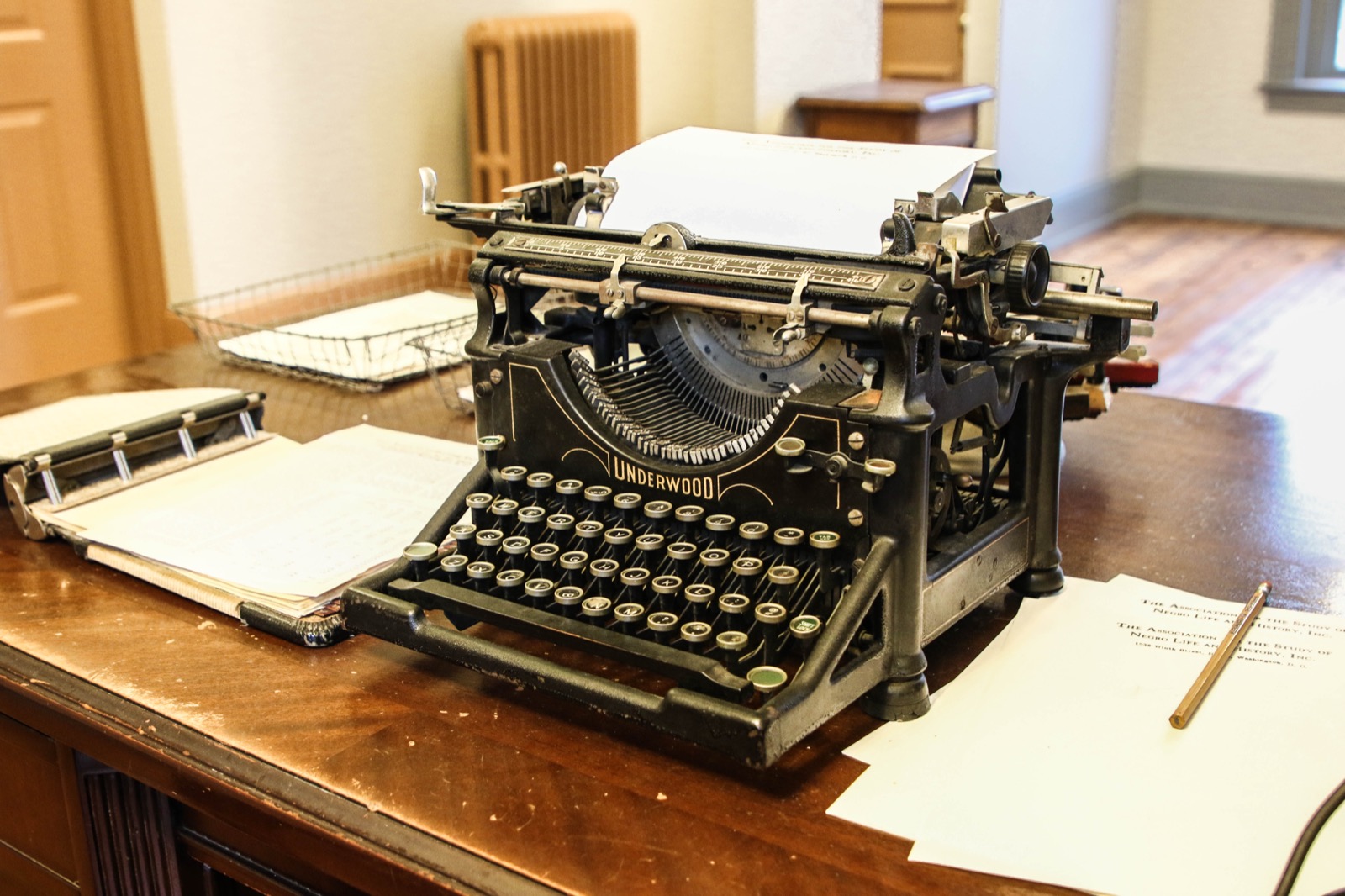
Underwood typewriter and papers on a desk at the Carter G. Woodson Home National Historic Site.
A typewriter and papers on a desk at the Carter G. Woodson Home National Historic Site. Credit: Victoria Stauffenberg / National Park Service via Wikimedia Commons.

Opening Summary

Carter G. Woodson’s home is useful to CultureUp because it shows Black history work as a place-based method. The record is not only about one scholar. It is about an office-home, an association, a publisher, manuscripts, and a public-memory infrastructure built around source discipline.

Why This Belongs on CultureUp

CultureUp needs source-literacy stories that show how public memory gets built. Woodson’s office-home belongs in that lane because the National Park Service frames the site as a headquarters for the Association for the Study of Negro Life and History and the Associated Publishers, Inc.

What the Public Record Supports

The public NPS trail supports the office-home, Woodson’s public role, and the institutional relationship between home, association, publishing work, and manuscript custody. The Library of Congress finding aid adds the public archive route for Woodson’s papers and helps keep the article focused on source method rather than monument language.

What Remains Uncertain

The route now has reviewed public-domain site media and a media ledger entry. Owner/editorial review should still decide whether the page remains a noindex direct-review feature or is promoted as an indexable source-literacy guide tied to Source Index.

Source notes and correction path

The source trail below names the public records used for this article. Readers can request corrections at /corrections when a stronger source, missing credit, local archive, or stewardship note belongs in the public correction path.

Sources

Read the record alongside the story.

1

The Office-Home

Public source in the CultureUp source trail for The Office-Home.

National Park Service

2

Carter G. Woodson

Public source in the CultureUp source trail for Carter G. Woodson.

National Park Service

CultureUp Dispatch

Join the CultureUp Dispatch.

Get stories with sources attached, public-memory features, music and media updates, and community calls without the noise.

Source notes includedMusic and media notes

Add your email interest and CultureUp will route follow-up through the editorial contact desk.

Participate after reading

Have context to add?

Send a correction, community memory, media credit, event lead, or story tip. You do not need to know the perfect lane before you share context.

Open Participate form

Independent support

Help keep this work independent

This article is part of an independent cultural learning network built around source-aware storytelling, careful research, and responsible public education. Support helps fund source notes, timelines, corrections, research guides, and continued publishing.

Organizations, educators, publishers, bookstores, archives, creators, and cultural institutions can also become self-serve sponsors of the network.

Account setup requiredAccount setup requiredSponsor the network