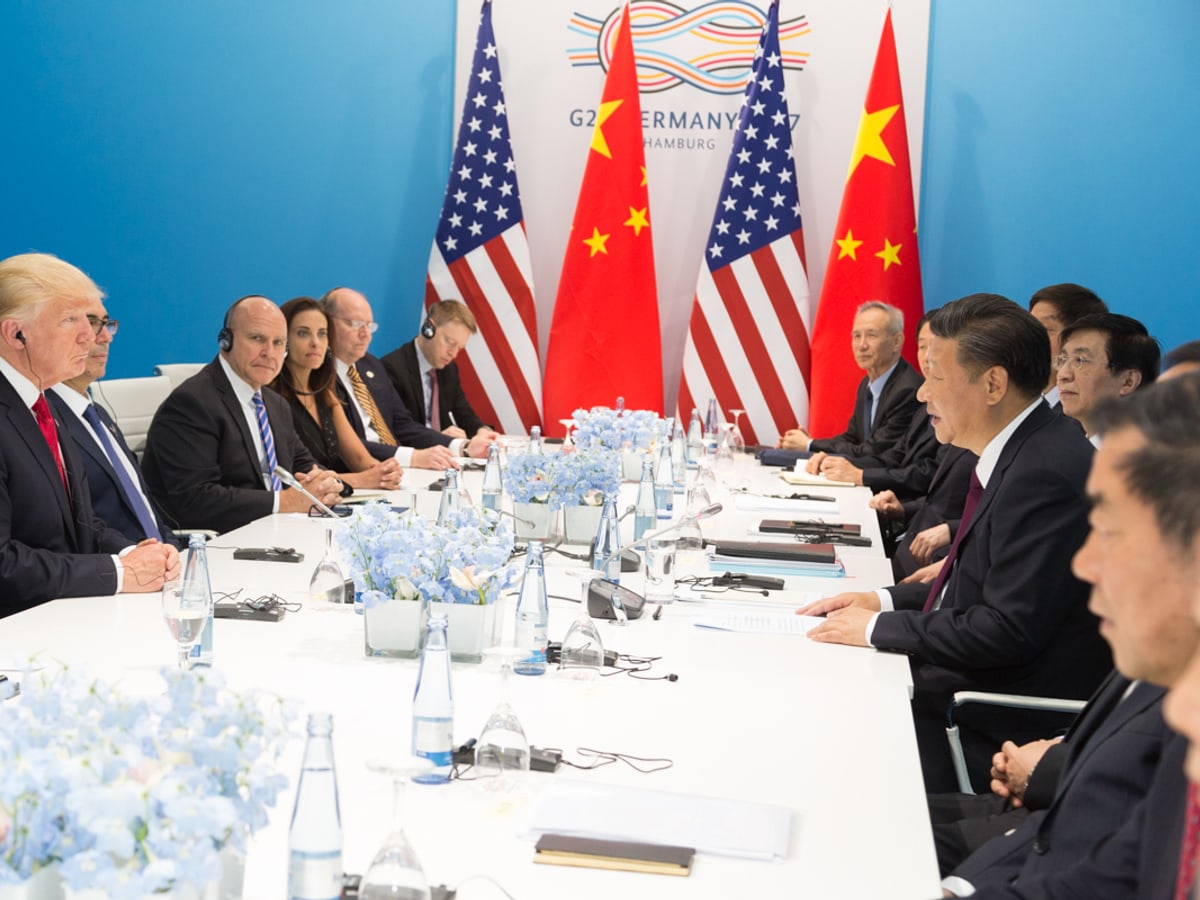
Beijing did not receive President Donald Trump as a footnote from an older rivalry. It received him as a necessary counterpart in a world that is changing faster than most governments, markets, and citizens have fully understood.
Trump’s China visit, centered on talks with President Xi Jinping at the Great Hall of the People, arrives at a moment when the global order is visibly shifting. Trade pressure, the Iran war, Taiwan, artificial intelligence, advanced chips, rare earths, and the reach of American business are no longer separate policy lanes. They are now one connected test of whether the two largest powers can manage transformation without letting it harden into permanent confrontation.
This is not likely to become an alliance of ideology. It may become an alliance of necessity.
The deeper question is bigger than any one summit: are the global powers shifting, and could this be the beginning of a stronger U.S. and China relationship? The answer is yes, but not in the traditional sense of an alliance. This is not a friendship pact, a treaty bloc, or a NATO arrangement. What may be emerging is something more unusual: a strategic pause in the march toward confrontation, built on the recognition that neither Washington nor Beijing can afford a world where every major crisis becomes another proxy battlefield.
Why this visit matters
This visit matters because the U.S. and China relationship is no longer just about tariffs. It is about the architecture of the next era. The future of trade, energy, chips, artificial intelligence, military deterrence, food systems, shipping lanes, and critical minerals is increasingly bound together. A tariff dispute can become a supply chain crisis. A chip rule can become a national security flashpoint. A war in the Middle East can become a test of whether China and the United States can cooperate when their interests overlap.
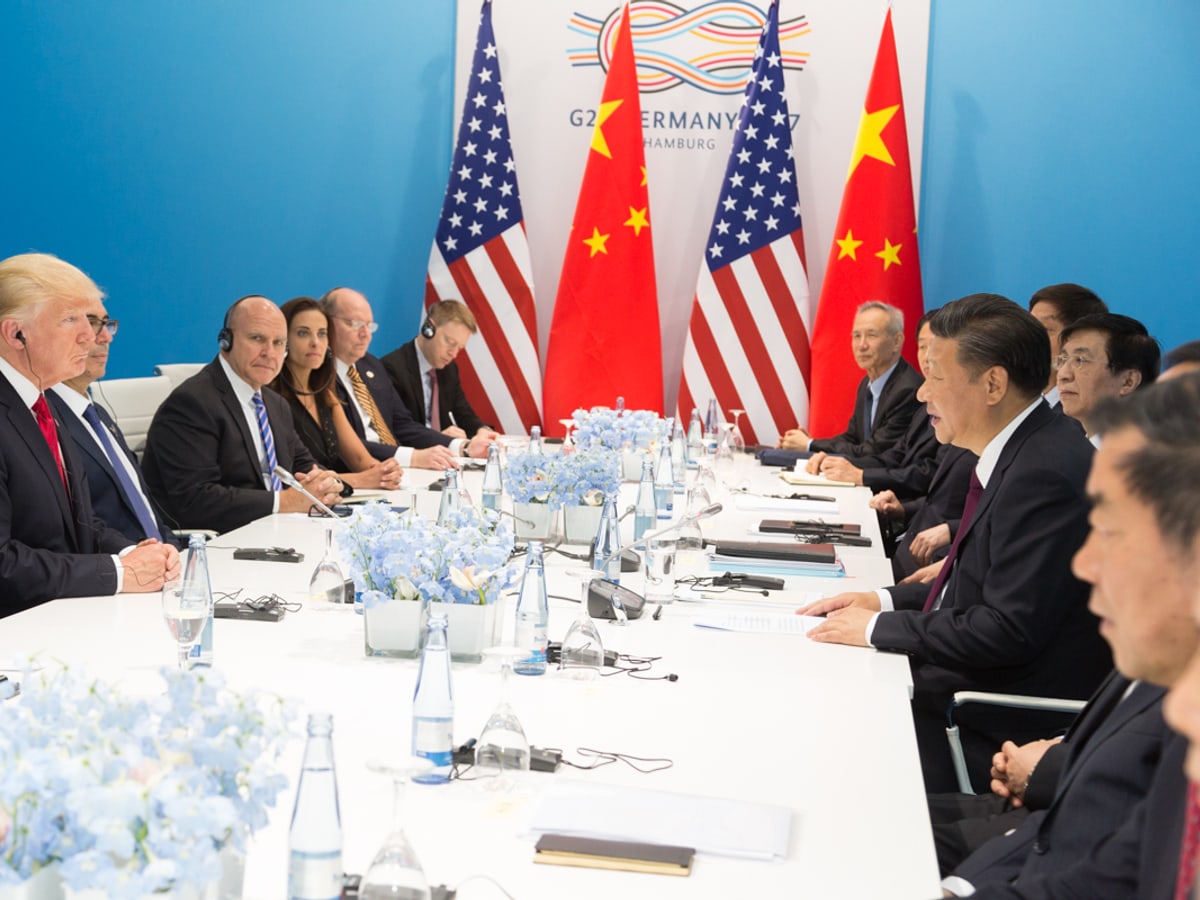
Trump enters Beijing seeking visible wins: more market access for American companies, a stronger trade framework, possible purchases of U.S. goods, and Chinese help on Iran. China enters the summit seeking predictability: fewer shocks from Washington, relief from technology pressure where possible, and a U.S. posture on Taiwan that does not accelerate crisis. The public language has been warmer than the underlying disputes, but that is precisely why the visit matters. Great power diplomacy often begins with symbolism before it becomes structure.
Why China appears willing to work with Trump
China’s willingness to work with Trump should not be confused with submission, affection, or ideological alignment. It is strategic. Beijing sees Trump as transactional. That makes him unpredictable, but also negotiable. A leader who frames the relationship through leverage, markets, personal diplomacy, and visible deals creates a different opening than one who frames China primarily through permanent ideological confrontation.
China also has its own reasons to stabilize relations. It wants access to global markets. It wants to avoid a full technology blockade. It wants predictable trade conditions while managing internal economic pressure. It wants recognition as an equal pole in world affairs rather than a subordinate power being managed by Washington. The summit’s business delegation and reported focus on AI chips, aircraft, agriculture, energy, and investment are signs that both governments are searching for an economic track that can cool the political temperature without pretending the rivalry has disappeared.
The United States has reasons to engage as well. America remains a dominant military, technological, financial, and cultural power. But it is carrying multiple pressures at once: Middle East escalation, Indo Pacific deterrence, domestic industrial policy, tariff politics, inflation pressure, and the AI race. A direct confrontation with China would multiply every burden. A managed reset between the United States and China would not solve those pressures, but it could prevent them from converging into one larger strategic crisis.
Are the global powers shifting?
Yes, but the shift is not as simple as China rising and America falling. The real shift is from a unipolar world to a negotiated multipolar world. The United States still possesses enormous advantages: capital markets, military reach, alliances, energy strength, research institutions, and the world’s most influential technology companies. China possesses scale, manufacturing depth, infrastructure capacity, rare earth leverage, state coordination, and growing influence across the Global South.
The new world is not one in which one power simply replaces the other. It is a world where power becomes distributed across systems: chips, energy grids, mineral supply chains, logistics networks, military platforms, data centers, food routes, finance, and artificial intelligence. That is why the Beijing summit is bigger than a handshake. It is about whether the two countries can build rules for a world where every system is becoming strategic.
Artificial intelligence is central to that transformation. The United States and China do not need to merge their AI ecosystems, and they are unlikely to share their most sensitive technologies. But they do need guardrails. An AI hotline, incident reporting process, limits on autonomous escalation, and shared expectations around model enabled cyber or military activity could become the 21st century equivalent of Cold War crisis management tools. That would not be an alliance. It would be a form of great power responsibility.
What a Stronger U.S. and China Relationship Could Look Like
This is an editorial framework, not a prediction that all items will be agreed during the Beijing summit.
| Lane | What it could mean | Why it matters |
|---|---|---|
| Economic détente | Tariff pauses, targeted tariff relief, purchases of U.S. goods, and clearer investment rules. | Reduces the risk that trade disputes become permanent economic warfare. |
| Critical minerals restraint | Rules around rare earth pressure, export controls, and supply chain retaliation. | Prevents minerals and manufacturing inputs from becoming routine weapons of crisis. |
| AI guardrails | Communication channels, incident review, and limits around dangerous military or cyber uses. | Keeps the AI race from becoming an unmanaged security race. |
| Middle East crisis cooperation | China uses economic ties and energy interests to support deescalation where possible. | Shows that rivalry can pause when global stability is at stake. |
| Taiwan risk management | Open military channels, careful language, and reduced incentives for sudden escalation. | Preserves deterrence while reducing the chance of miscalculation. |
| Disciplined competition | The two countries compete openly but keep boundaries around trade, technology, and security crises. | Turns rivalry from a path to rupture into a managed long term structure. |
The alliance question
A stronger U.S. and China relationship would not look like America and China suddenly agreeing on everything. It would look like structured coexistence. Tariffs would not vanish overnight. Taiwan would not be resolved in a press conference. Semiconductor controls would not disappear because two leaders smiled for cameras. But both countries could begin creating channels that keep disputes from becoming runaway escalation.
That distinction matters. A formal alliance is almost impossible because the United States and China still hold incompatible positions on too many issues: Taiwan, military posture in Asia, technology controls, human rights, information systems, and the role of the state in markets. But an alliance of necessity is more plausible. It would be built around shared exposure to global disorder, not shared ideology.
In that version of the future, the United States and China remain competitors, but not enemies by default. They compete over chips, electric vehicles, AI models, trade influence, and diplomatic reach, while preserving communication channels on war, finance, shipping, energy, and catastrophic technology risk. That is not sentimental. It is practical.
Why this could still fail
The optimistic case is real, but it should not blind anyone to the dangers. The summit’s warm language exists alongside hard disputes over Taiwan, arms sales, semiconductor restrictions, rare earths, sanctions, Iran, and China’s regional ambitions. U.S. allies in Asia will watch carefully for any sign that Washington is trading away regional commitments for a headline deal. China’s own system will resist any outcome that makes Beijing appear to accept a secondary role.
There is also a domestic political challenge inside the United States. Any Trump deal with China will be scrutinized by critics who fear concessions. Any Chinese flexibility will be scrutinized inside China by those who do not want Beijing to appear weak. Both leaders must perform strength at home while making compromise abroad. That is the paradox of great power diplomacy: the toughness that gets leaders to the table can make it harder to leave with a durable agreement.
The deeper transformation
The larger truth is that the world is entering a period of transformation that many have not yet fully imagined. The 20th century map of power was built around nation states, oil, armies, industrial output, and formal alliances. The 21st century map is being built around AI, chips, data centers, energy systems, mineral control, biotechnology, orbital infrastructure, automated manufacturing, and financial networks that move faster than governments can regulate.
In that world, America and China are not just rivals. They are joint architects of possibility and potential instability. Their choices will shape whether transformation becomes a shared framework, a fragmented struggle, or a sequence of crises that pulls other nations into alignment by fear rather than vision.
This is why Trump’s China trip may prove more important than a standard diplomatic visit. It is a test of whether the world’s two largest powers can look beyond the familiar language of rivalry and recognize that the next era will punish nations that mistake chaos for strength.
The bottom line
A stronger U.S. and China relationship would not mean the end of competition. It would mean the beginning of mature competition. It would mean both countries understand that the goal is not to destroy the other, but to prevent their rivalry from destroying the world around them.
Not an alliance of sentiment. Not an alliance of ideology. Perhaps an alliance of necessity, formed at the edge of a changing world.
The question is not whether America and China will compete. They will. The question is whether they can compete within boundaries, cooperate where survival demands it, and build enough trust to keep transformation from becoming catastrophe. If Trump and Xi can move even a few steps in that direction, this visit may be remembered not simply as a summit, but as the opening chapter of a new global realignment.