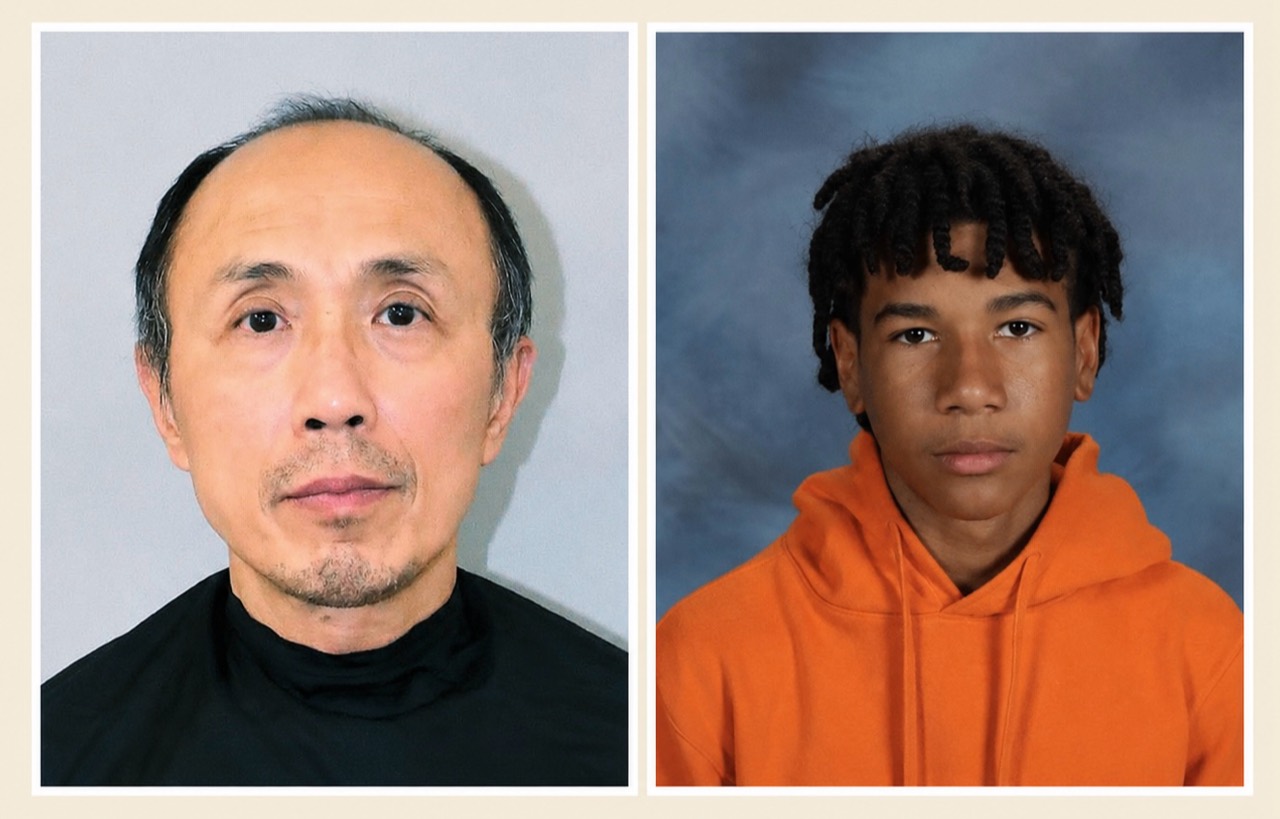
On June 1, 2026, a South Carolina jury found Chikei "Rick" Chow not guilty of murder in the fatal shooting of Cyrus Carmack-Belton, a 14 year old Black child killed outside a Columbia area gas station in May 2023. Chow, who AP identifies as Asian, shot Cyrus in the back after a chase that began with a suspected theft accusation.
The courtroom gave Chow freedom from a murder conviction. It did not give Cyrus back his breath. It did not give his family a son. It did not give Black Columbia the assurance that a child's life weighs more than a storeowner's suspicion.
CultureUp is publishing this as Black public memory because it is not only about one gas station, one jury, or one defendant. It belongs to a longer record of Black children and Black customers being treated as threats inside commercial spaces where suspicion can move faster than truth.
The accusation was the spark
The state did not ask the public to imagine a perfect child. The state asked the jury to look at the sequence. Prosecutors said Cyrus was wrongly suspected of taking water, that video showed him putting the bottles back, and that the pursuit continued beyond the store.
That detail matters. The accusation was the spark. If the accusation was wrong, then the moral center of the case shifts. A Black child was not killed after a confirmed theft. He was killed after suspicion, confrontation, pursuit, and a gunshot to the back.
A bottle of water cannot become a death warrant.
Prosecutors acknowledged that Cyrus had a semiautomatic pistol, but argued it fell during the chase and that Cyrus never threatened anyone with it. The defense argued that Chow fired to protect his son. The jury accepted enough of the defense account to acquit Chow of murder.
Black public memory does not have to pretend the gun detail is irrelevant. It also does not have to let that detail erase the chase, the false suspicion, the age of the child, the shot to the back, or the pattern that Black families recognize immediately.
The familiar storefront wound
For many Black families, the death of Cyrus Carmack-Belton immediately calls up the name Latasha Harlins.
In 1991, Latasha Harlins was a 15 year old Black girl in Los Angeles. She was accused of stealing orange juice from a store. Soon Ja Du, a Korean storeowner, shot Latasha. Du was convicted of voluntary manslaughter, but she did not serve a prison sentence. That outcome became part of the public grief that helped shape the memory of the 1992 Los Angeles uprising.
The cases are not identical. The cities are different. The legal outcomes are different. The facts are not interchangeable. But the memory pattern is hard to miss: a Black child enters a store, a low cost item becomes the excuse, suspicion becomes confrontation, confrontation becomes violence, and the court system delivers something far less than what Black families recognize as justice.
This is not a call to hate Asian people, immigrants, or any non Black community. That would be morally false and politically cheap. The issue is more specific and more dangerous: in many Black neighborhoods, outside and foreign born business owners have sometimes profited from Black customers while treating those same customers as permanent suspects.
That arrangement is not solved by pretending it does not exist. It is solved by demanding accountability, lawful restraint, community respect, better business standards, and a justice system that refuses to treat Black life as collateral damage in a retail dispute.
The law protected the fear of the armed pursuer
One of the cruelest features of this case is the way the trial turned on fear.
The defense centered Chow's fear for his son. The prosecution centered Cyrus as a child running away. Witnesses became critical because the legal question narrowed around whether Cyrus pointed a weapon and whether Chow believed deadly force was necessary.
But in America, fear is not distributed equally. Black children are rarely granted the full humanity of fear. Their fear is read as guilt. Their running is read as threat. Their panic is read as confirmation that they must have done something. Meanwhile, the armed adult who continues the pursuit can have his fear translated into defense.
That is the courtroom imbalance Black America knows too well. The dead child's fear disappears. The shooter's fear becomes evidence.
This was not the first warning sign
Public reporting also showed why Black Columbia's anger did not come from nowhere. CBS reported in 2023 that Chow had previously shot a shoplifter and had opened fire on the vehicle of another suspected shoplifter in separate incidents, without being charged after officials said the incidents did not meet South Carolina's criminal charge requirements.
That history does not decide the legal facts of Cyrus's death. But it belongs in the public memory of the place. It raises a civic question: how many warning signs can surround a business before a community is allowed to say the danger is not only inside the people being watched, but also inside the way the owner watches them?
The verdict did not end the case for the community
After the acquittal, Cyrus's family and supporters reacted with grief and anger. Public reporting says the family plans to pursue a civil lawsuit. Protesters also returned to the gas station, carrying the demand that the criminal verdict not become the final public word.
That protest is not disorder. It is memory refusing burial.
Black communities have learned that courtrooms can close a criminal case before the wound has even been named properly. A verdict may end the murder charge. It does not end the moral record. It does not end the public demand. It does not end the family's right to say: our child mattered.
Why CultureUp is publishing this story
CultureUp is not becoming a general crime site. This story belongs here because Black public memory includes the record of how Black life is treated in everyday public space. The storefront is public memory. The gas station is public memory. The surveillance camera is public memory. The chase route is public memory. The courtroom is public memory. The verdict is public memory. The protest after the verdict is public memory.
Cyrus Carmack-Belton was not a symbol first. He was a child first. He had a name before the accusation. He had a life before the chase. He had a family before the defense narrative. He had a future before a bullet entered his back.
The country will try to reduce him to the weapon found near his body. It will try to reduce him to the storeowner's fear. It will try to reduce him to what a jury did not convict. Black memory must refuse that reduction.
The deeper question
The deeper question is not whether theft is wrong. The evidence presented in court did not support the simple story that Cyrus stole the water. But even if it had, a child's life cannot be priced against a bottle.
The deeper question is not whether communities should be concerned about youth carrying guns. They should. But that concern cannot be weaponized after death to erase the choices of armed adults who escalated a suspected store incident into a pursuit.
The deeper question is whether Black children are allowed to be children in America, or whether every accusation turns them into adults, criminals, threats, and targets before anyone has to prove a thing.
Latasha Harlins was killed after an accusation over orange juice. Cyrus Carmack-Belton was killed after an accusation over water. Between those names stretches more than three decades of Black public grief.
The object changes. The logic remains.
A store shelf is treated as sacred. A Black child is treated as disposable. A family is told to accept the verdict. A community is told to calm down. A memory is told to move on.
CultureUp will not move on from Cyrus Carmack-Belton.
Source trail and correction limits
This article follows the public source trail available at publication time. It relies on current reporting about the verdict, trial record, protest response, prior reported incidents, and the public memory of Latasha Harlins. It does not publish nonpublic evidence, certify legal claims beyond public reporting, or treat the acquittal as erased simply because the criminal case reached a verdict.
If later court records, civil filings, witness statements, or official documents sharpen the public record, CultureUp should update the source trail and preserve the correction path rather than treating this first publication as the final word.