Opening Summary
Black American women did not wait for the beauty industry to discover them. They were the industry before it had a corporate name: chemists in kitchens, hair culturists in storefronts, teachers in beauty schools, inventors before the Patent Office, advertisers in Black newspapers, and image-makers whose styles became national standards only after the wider market learned how to sell them back.
Black hair has always carried more than appearance. It holds law, labor, invention, migration, marketing, punishment, resistance, and ceremony. For Black women, hair care was self-possession under pressure, a technical practice inside the home and the salon, and a public argument over who had the authority to define beauty.
The Indian Mark in the Black Hair Archive
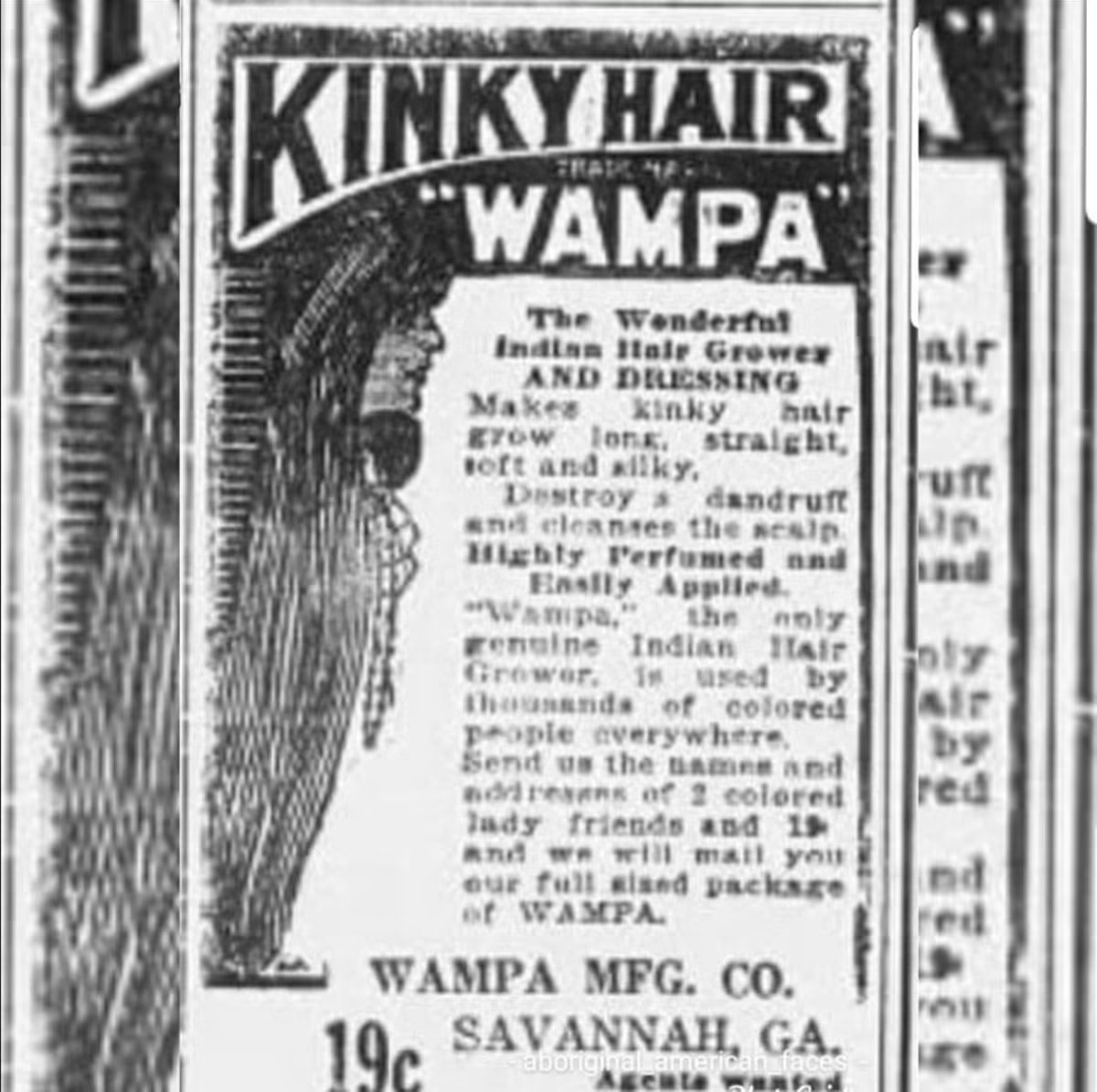
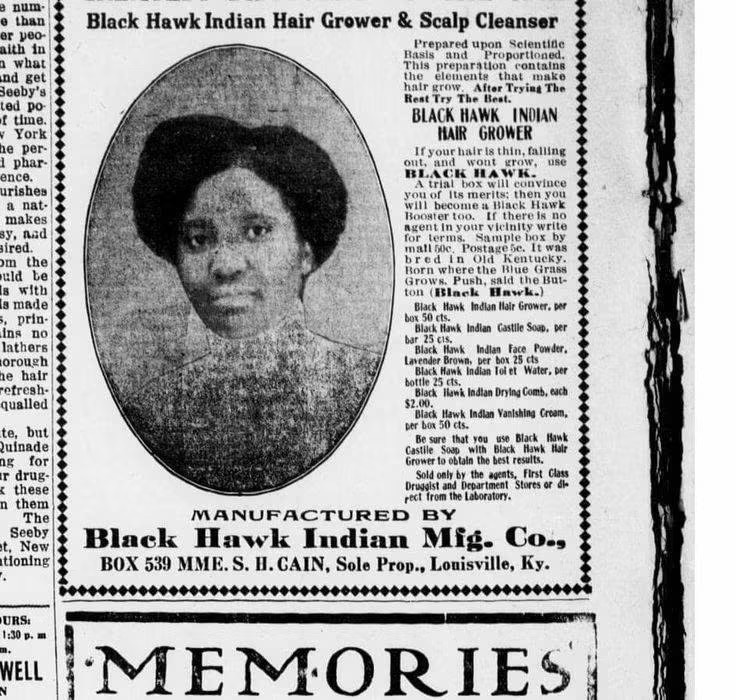
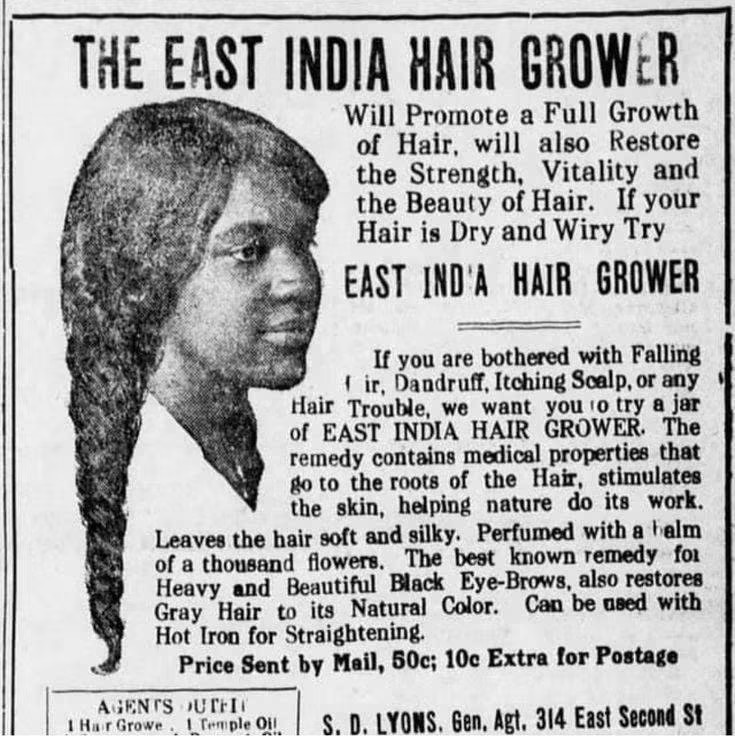
The reader-supplied clippings for Black Hawk Indian Hair Grower, East India Hair Grower, and Wampa Indian Hair Grower place Indian, East India, Black Hawk, and Wampa language beside kinky hair, scalp cleansing, growth claims, softening, straightening, perfuming, soaps, tonics, agents, and mail-order beauty commerce. CultureUp preserves that language as a public-memory clue, not as overextended proof. The Oklahoma Historical Society’s record for S.D. Lyons and East India Hair Grower shows this was part of a broader Black beauty-commerce world.
Hair as Law, Resistance, and Self-Possession
Black women’s hair has been policed for centuries. The tignon laws tried to control Black women’s public appearance by requiring head coverings. Black women answered by turning the covering into style, ceremony, and social presence. That pattern repeats: a control system appears, and Black women turn pressure into technique, art, and power.
The First Beauty Industry Was a Black Women’s Knowledge System
Before mainstream beauty learned the language of textured hair, Black women had already built the infrastructure: hair culturists, scalp treatments, mail-order products, local agents, beauty schools, product demonstrations, and community distribution. Annie Turnbo Malone’s Poro system and Madam C.J. Walker’s training-and-sales network show Black women building institutions from hair-care knowledge.
The story also requires correction. Museum sources note that Walker did not invent the hot comb, even though that claim is repeated often. Accurate public memory matters because miscrediting can erase the broader chain of formulas, schools, salons, agents, and local Black women’s expertise.
That broader chain is the historical value of the record. A patent can document a named inventor, a claimed mechanism, and a grant date, but it cannot by itself measure every stylist, customer, classroom, or neighborhood practice that made an invention useful. Beauty-school histories and museum interpretation supply institutional context; advertisements show how products were described and circulated; patent files establish narrower technical claims. Reading those records together keeps formal invention visible without pretending the Patent Office captured the whole Black women’s knowledge system.
The Patent Record: Black Women Built the Tools
Black women in the public patent trail
The patent archive is incomplete, but these records show Black women turning hair knowledge into formal invention records.
| Inventor | Public record | Why it matters |
|---|---|---|
| Lyda D. Newman | U.S. Patent No. 614,335 for an improved brush, granted in 1898. | A hairdresser’s design for durability, hygiene, and convenient cleaning. |
| Marjorie Stewart Joyner | U.S. Patent No. 1,693,515 for a permanent waving machine, granted in 1928. | Salon practice turned into machinery inside the Walker beauty-school network. |
| Christina M. Jenkins | U.S. Patent No. 2,621,663 for attaching commercial hair to live hair, granted in 1952. | A hair-weaving process placed into formal patent language before the modern extension market became massive. |
Stolen, Assigned, Overshadowed, Rebranded
The theft of Black women’s hair knowledge has not always looked like one dramatic act. Sometimes it appears as public-memory erasure, corporate assignment, commercial rebranding, or market delay: Black women create, teach, test, popularize, and standardize; later, companies repackage the practice as a mainstream discovery.
From Protective Styling to the CROWN Act
Black American hair standards did not move in a simple line from natural to straightened to natural again. Wraps, braids, presses, sets, wigs, waves, sew-ins, locs, twists, silk presses, lace fronts, knotless braids, and protective styles all belong to a continuing argument over freedom, employment, beauty, and public respect. The CROWN Act fight proves the policing never ended and places Black hair texture and protective styles inside civil-rights language.
Before America learned to call Black women’s hair professional, acceptable, ethnic, natural, protective, or trendy, Black women had already crowned themselves.
Source Notes and Correction Path
Readers can request corrections at /corrections when a stronger source, missing newspaper citation, rights note, patent record, or local archive belongs in the public correction path.