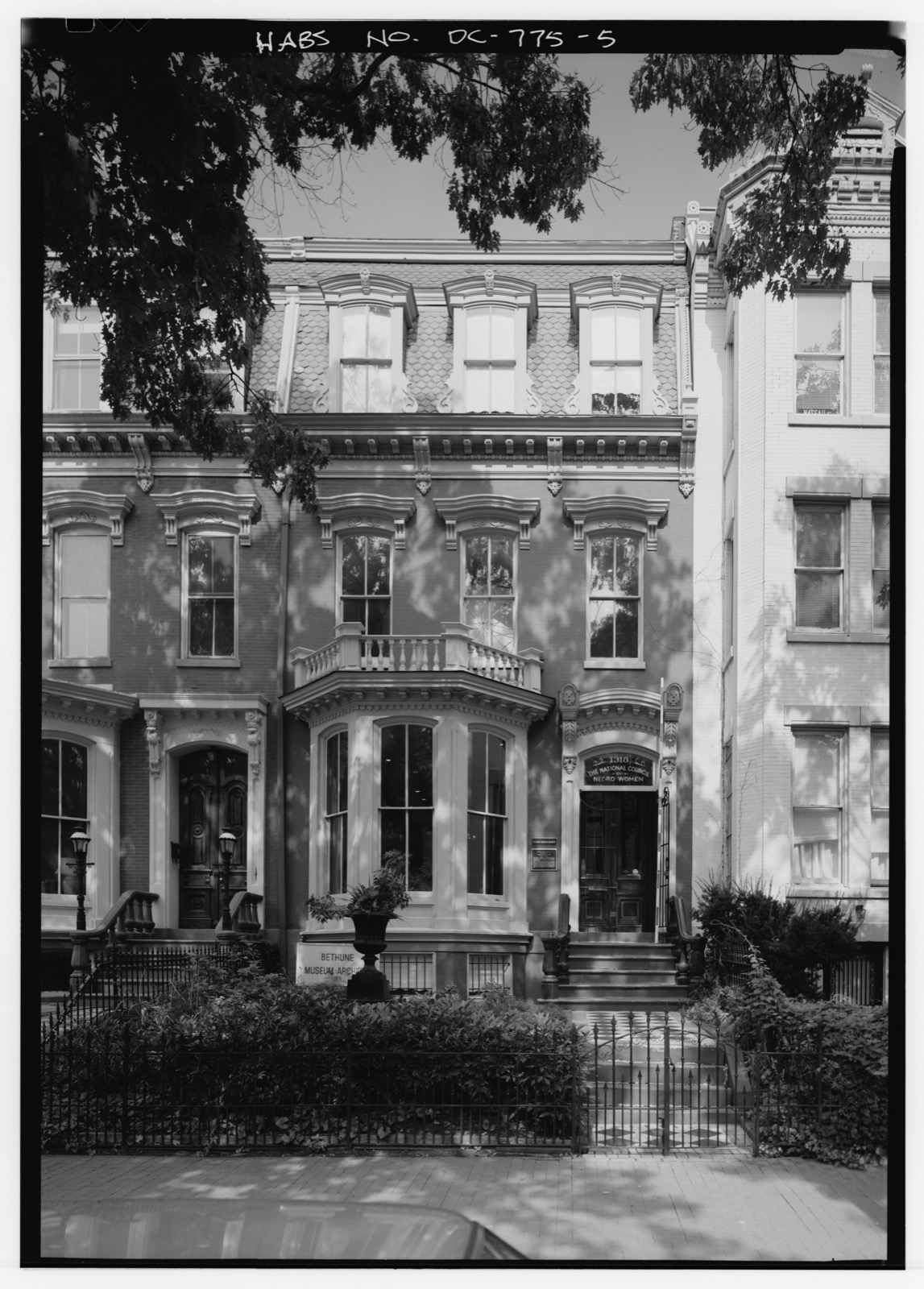
Opening Summary
Mary McLeod Bethune’s Council House should be read as more than a preserved address. It is a place where Black women’s civic institution-building, record stewardship, and public memory became visible through an archive that readers can still locate.
The current source trail supports the public frame. Additional photographs, local archival records, and item-level media can be added after source, rights, caption, credit, and stewardship review.
Why This Belongs on CultureUp
This story belongs on CultureUp because it is rooted in place, institution, public records, and Black women’s archival stewardship. It is not a generic biography of Mary McLeod Bethune and it is not a broad women’s-history summary. The CultureUp frame is narrower: how a house, a council, and an archive became public-memory infrastructure.
Place And Institution Context
The National Park Service identifies the Mary McLeod Bethune Council House as a National Historic Site in Washington, DC. NPS also notes that the Council House stewards the National Archives for Black Women’s History. That matters because the public-memory story is not only about a prominent leader; it is about a record system created to keep Black women’s history findable.
The Council House page describes the building as a reminder of Bethune, the National Council of Negro Women, and Black women who shaped American history. The collection page identifies the National Archives for Black Women’s History as an archive dedicated to the history of Black women.
Main Narrative
A house can become an archive when a community decides that memory needs a permanent address.
Bethune’s public life can be told through schools, civic work, federal service, and institution-building. CultureUp’s useful route is the record trail: what public institution now holds the story, what collection is attached, and how a reader can move from a name to a place to an archive.
The Council House makes that route visible. It connects Bethune’s leadership, the National Council of Negro Women, the Bethune Museum, and the National Archives for Black Women’s History. That combination turns the site into a lesson about public memory itself. A reader is not being asked to accept a flattened tribute. The reader can follow the institutional path.
What the Public Record Supports
The public source trail supports these careful claims:
The Council House is a National Park Service site. The Council House is connected to Bethune and the National Council of Negro Women. The Council House stewards the National Archives for Black Women’s History. The archive frame is public and reviewable through NPS source pages.
What Remains Uncertain
This draft does not claim to summarize the full life of Mary McLeod Bethune, the complete history of the National Council of Negro Women, or every collection held by the National Archives for Black Women’s History. The route now has reviewed public-domain place media, but it remains noindex until owner/editorial review decides whether the story is ready for public discovery and sitemap inclusion.
Correction Path
If a reader knows a stronger public collection guide, missing credit, public archive source, or correction, CultureUp should update the source trail rather than stretching the current record beyond what it supports.
Source notes and correction path
The source trail below names the public records used for this article. Readers can request corrections at /corrections when a stronger source, missing credit, local archive, or stewardship note belongs in the public correction path.