Cats did not first enter human life as pampered indoor mascots. The stronger ancient story is more practical and more revealing: people made spaces where stored food needed protection, cats followed the prey, and a working relationship gradually became a domestic relationship. That is why the cat can look so modern in an ancient image. The emotional bond came after usefulness, not instead of it.
This matters for CultureUp because readers often meet Kemet through oversized symbolism alone. The household record offers something better. It lets the page talk about labor, storage, home design, animal behavior, and affection without pretending that ancient domestic life was identical to a modern apartment with a litter box, a feeding schedule, and a veterinary file.
Before cats became pets in the modern sense, they became housemates with a job.
Opening context
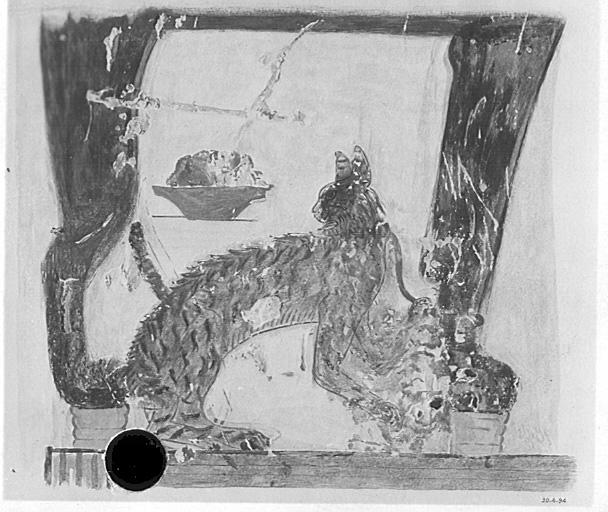
The attached UCL, Penn Museum, and Metropolitan Museum of Art materials all point in the same general direction. Cats mattered in ancient Egyptian domestic life because they were useful around food stores and household spaces, and they also appear inside the social world of the home rather than only outside it. That combination is the real story. A cat under a chair is not a random decorative detail. It is a clue about proximity, familiarity, and place.
Readers should also keep the time gap visible. Ancient Kemet was not doing modern pet adoption. Homes were more porous, daily life was organized differently, and movement between indoor and outdoor space was not controlled the way it is in many contemporary homes. The question is not whether ancient Egyptians invented the indoor-only house cat. The better question is when cats became part of the human household world in a durable way.
The core story
The practical explanation starts with grain, pests, and household protection. UCL's museum discussion frames the longer relationship around cats moving near stored food and human settlement. The Penn Museum's cat material reinforces the idea that cats had value in the home as protectors. The Met's tomb image of a cat seated under a chair gives the household frame a visual anchor. Together, those sources let CultureUp tell a modest but strong story: cats entered domestic life through usefulness and stayed because usefulness became familiarity.
That household frame matters because it keeps the page from splitting the cat into two false options: sacred symbol or modern pet. The record suggests a more interesting middle. Cats could move through courtyards, storerooms, roof spaces, and family scenes. They were not sealed off from human life, and they were not reduced to a single ceremonial meaning. They occupied a threshold space that still feels familiar to anyone who has known a cat that behaves partly like a companion and partly like management.
What the record shows
The attached sources support several careful claims. UCL supports the practical route from stored food to pest control and growing human-cat closeness. The Penn Museum supports the idea that cats held household value as protectors and companions. The Met object supports the visual point that cats appear in domestic scenes rather than only in abstract symbolic contexts. That is enough to say that ancient Egyptian cat life included real household presence, not just later fantasy projected backward.
The strongest reader takeaway is simple: the ancient cat was useful first, intimate second, and still not fully domesticated in the modern controlled sense. That is why the story feels durable. It explains both the animal's independence and its closeness to people without forcing either side to disappear.
How the source trail works
| Source | What it helps verify | Limit |
|---|---|---|
| UCL museum discussion | Cats near grain stores and domestic spaces | Public-facing summary, not a complete archaeological record |
| Penn Museum cat material | Household value and protector frame | Does not prove every home used cats the same way |
| Met tomb image | Domestic visual context | One image cannot stand in for every period or household |
What the record does not show
These sources do not prove that ancient Egyptian cats lived like modern indoor pets. They do not prove every household treated cats affectionately, and they do not settle every debate about domestication timelines across regions. The attached evidence is strongest when it is used to describe household proximity, visual context, and practical value, not when it is pushed into universal claims.
That limit should stay visible because the modern internet often turns ancient-animal history into easy sentiment. CultureUp's job is to keep the useful distinction clear: a domestic scene can support a household reading without authorizing a full modern pet narrative.
Why this matters for CultureUp readers
This page works because it teaches readers how to look at ordinary life in the ancient world. Public memory is not only temples, kings, and monumental symbols. It is also storage, work, animals, furniture, and the clues people left in scenes of home. When readers learn to notice those details, ancient history becomes less like distant spectacle and more like a lived human environment.
It also sharpens CultureUp's style. The point is not to strip wonder from the cat story. The point is to give the wonder a record trail. A familiar modern feeling becomes more interesting, not less, when readers can see the image, the museum holder, the caption limit, and the plain-language explanation side by side.
Media and caption note
The current Met-based image is appropriate because it is a real object-backed domestic scene with a public-domain route already attached to the record. The caption should keep the household frame visible and avoid pretending that one image proves the total history of cat domestication.
Any future expansion should keep rights review strict. Ancient-animal stories are easy to over-illustrate with unsourced web images. CultureUp should stay with museum-held, rights-cleared, object-specific media.
Source notes and correction path
Published CultureUp story. Uses museum and academic public-facing summaries from UCL, the Penn Museum, and The Metropolitan Museum of Art. The article separates ancient household life from the modern indoor-only pet model.