It was supposed to be a celebration of elders.
On May 15, the City of South Fulton hosted a Senior Legacy Event at Welcome All Park, promoted as an Older Americans Month gathering with fellowship, appreciation, entertainment, community connection, complimentary lunch, and all white attire. The city said the all white theme symbolized unity, elegance, and respect for seniors.
But the timing and location turned a feel good civic event into a public trust test. Welcome All Recreation Center was also listed by Fulton County as an advance voting location during that same election window. That overlap is why residents, election officials, reporters, and state authorities began looking closer.
The issue is not whether South Fulton seniors deserve celebration. They do. The issue is whether public leaders understood how quickly a celebration near an active polling place can become an election trust problem.
The warning came before the event
WSB-TV reported that voters contacted county and state election officials before the party, and that the county elections chair sent a late night letter reminding South Fulton officials about restrictions near active voting locations. WSB-TV also reported that its reporter measured the distance between the party area and the voting location three times and got 110 feet.
Mayor Carmalitha Gumbs told WSB-TV the correspondence arrived at 11:56 p.m. on the eve of the event, only hours before roughly 400 seniors were expected to attend. She argued that canceling or abruptly relocating the gathering would have unfairly punished the seniors the annual event was designed to honor.
That explanation may matter operationally. It does not end the public question. Once a warning existed, residents were always going to ask why the safer path was not chosen before the first plate was served.
Why the senior focus made the optics louder
The age breakdown graphic attached to this reporting packet shows older voters dominating the early vote universe it describes, with voters 65 and older listed as the largest share. CultureUp is treating that graphic as contextual material unless and until it is matched to an official data release. It does not prove influence, intent, or unlawful conduct.
Age breakdown graphic attached to the reporting packet
This table summarizes the image supplied with the assignment. CultureUp did not use it as legal proof of influence or wrongdoing.
| Age | Votes | Vote share |
|---|---|---|
| 18 to 29 | 31,171 | 4.5% |
| 30 to 39 | 36,660 | 5.3% |
| 40 to 49 | 56,908 | 8.2% |
| 50 to 64 | 184,932 | 26.6% |
| 65 plus | 386,209 | 55.5% |
| Unknown | 357 | 0.1% |
Even with that caveat, the optics are obvious. When seniors represent a powerful bloc in the early vote conversation, a senior focused event near an active voting site will receive more scrutiny than an ordinary community luncheon. That is not an attack on seniors. It is a reminder that public officials have to protect seniors and protect the appearance of election neutrality at the same time.
A new administration, an old trust problem
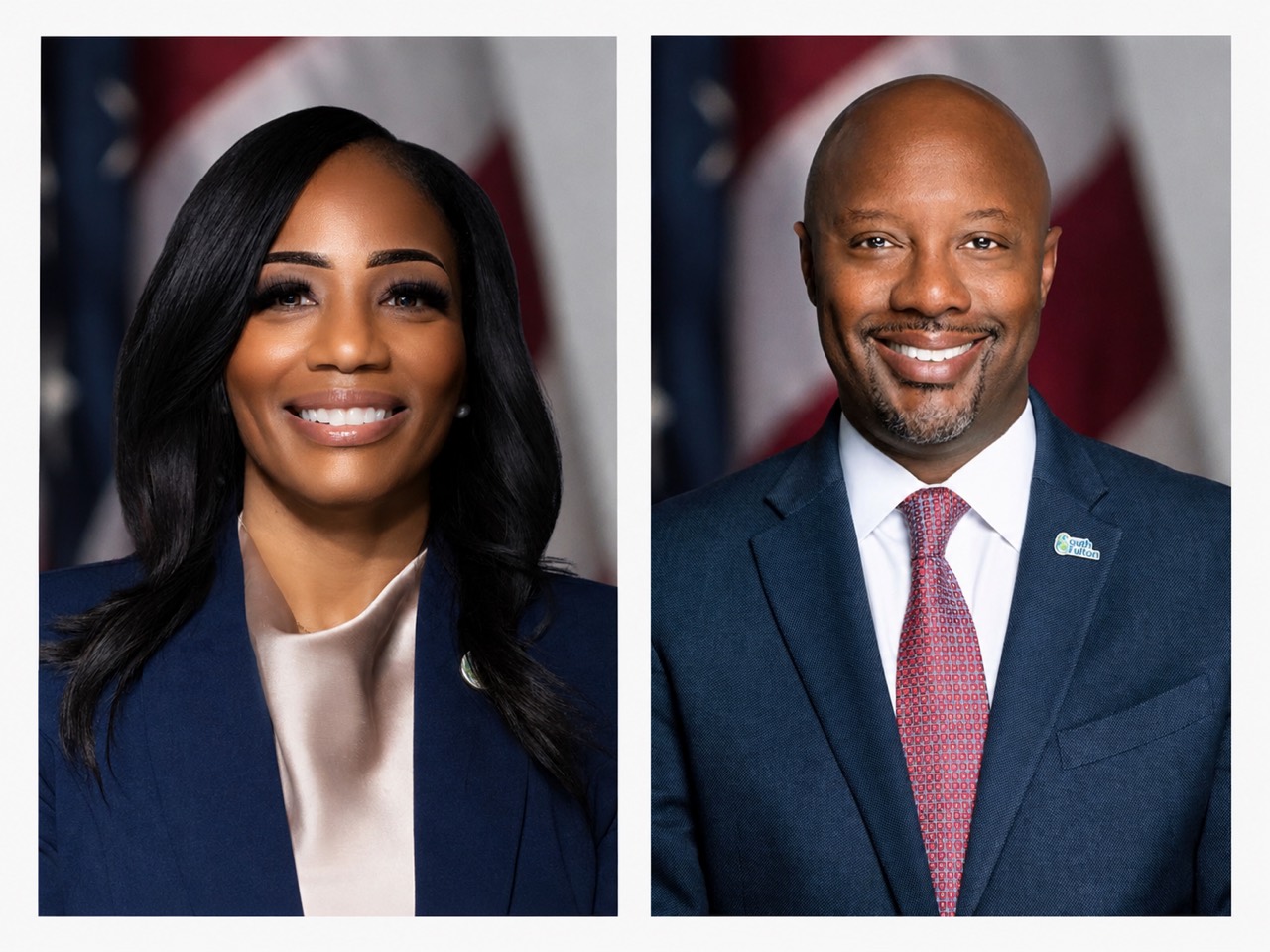
This moment also lands early in Mayor Gumbs' administration. South Fulton describes Gumbs as the city's first woman mayor, sworn in on January 5, 2026, after a December 2025 win with nearly 60 percent of the vote. Her stated priorities include rebuilding public trust, restoring financial transparency, and strengthening relationships across the city.
That makes the Senior Legacy controversy larger than one afternoon. Gumbs' mandate was built around repair, stability, and confidence in City Hall. Proceeding with a city event after an election warning now risks turning an inherited trust problem into an early leadership test.
The federal records seizure makes the backdrop heavier
The South Fulton story also sits beside a larger Fulton County election records controversy. CBS Atlanta reported that FBI agents searched the Fulton County Elections Hub and Operations Center at 5600 Campbellton Fairburn Road in Union City, focusing on records tied to the 2020 election. Reuters later reported that Fulton County challenged the seizure, seeking the return of confiscated files and the unsealing of the supporting affidavit.
The Associated Press reported that a federal judge ruled the Justice Department did not have to return the seized 2020 ballots and election materials. AP also noted that Fulton County has been central to unfounded claims by President Donald Trump and allies that widespread fraud cost him Georgia in 2020, while Georgia's 2020 presidential votes were counted three times, including once by hand, and each count affirmed Joe Biden's win.
These are separate matters. A senior event during an active voting period is not the same thing as a federal seizure of 2020 election records. But both stories point to the same civic pressure point: Fulton County voters are being asked to trust election institutions while local, state, and federal actors keep producing headlines that make trust harder to maintain.
What residents deserve next
The cleanest path forward is not defensiveness. It is disclosure. South Fulton residents deserve a clear timeline of who received the Board of Elections warning, when city officials read it, what advice was requested, what distance was used for planning, whether food or gifts entered any restricted zone, and what city policy will prevent future event conflicts during voting periods.
That kind of disclosure would not dishonor the seniors. It would honor them by making clear that a celebration of elders does not have to be placed in conflict with the public's confidence in the ballot box.
So yes, all eyes are on South Fulton. Not because the city is uniquely broken, and not because every mistake is a conspiracy. All eyes are on South Fulton because the city now sits inside a larger Georgia election trust story where every local decision is read against a national backdrop.